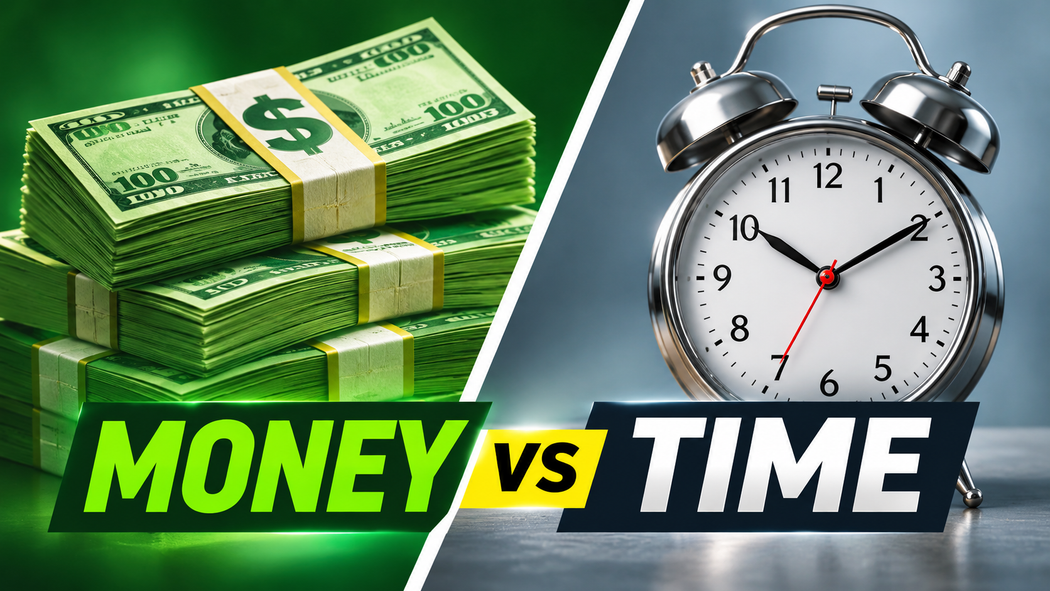
Most people chase money.
Some entrepreneurs build companies because they genuinely enjoy the process. I can relate to that. But many entrepreneurs and employees alike seem to optimize their lives around earning more money, often at the expense of their time.
I decided to do the opposite.
And after almost two years of living this way, I discovered a trap nobody warned me about.
The Money Trap
Somehow, we've accepted a particular life trajectory as the default.
Kindergarten. Elementary school. High school. University. Career. Marriage and children, perhaps.
In some countries, ambitious parents send their children to prestigious private schools, followed by expensive universities. A well-paid job might await them, along with substantial student debt.
In my country, Slovakia, education is largely free. But we face other economic challenges.
The underlying trajectory is remarkably similar.
Get educated. Find employment. Earn money. Buy a home. Work for decades. Eventually retire.
And everything seems to get more expensive.
An apartment I bought years ago has more than tripled in market value. Housing has become increasingly difficult to afford. Taxes and living costs place additional pressure on people's income.
Governments promise solutions, but those solutions often come with additional costs and difficult trade-offs.
I increasingly question whether this economic model is sustainable.
But I didn't always live outside it.
For a while, I earned considerably more than the average employee. I had multiple clients while also working on a startup. Sometimes I even slept in my office.
Yet I didn't become wealthy.
There's an important lesson here: sleeping in your office is no guarantee of success. We celebrate entrepreneurs who sacrificed everything and eventually became rich. We hear much less about those who made similar sacrifices and failed.
Survivorship bias is everywhere.
My lifestyle was taxing, especially mentally. I knew I had to change something before burning out.
The money was good. But higher earnings came with greater financial obligations, taxes, and expenses.
I eventually asked myself an uncomfortable question:
If I was earning so well, why wasn't I substantially closer to financial independence?
Of course, income isn't wealth. Earning money doesn't automatically mean accumulating it.
But it forced me to reconsider what I was optimizing for.
Was I working to live?
Or had earning money become an objective in itself?
Here's a question I suspect many people rarely consider:
Have you ever calculated the minimum monthly income you need for a comfortable life?
Not a flashy life with luxury cars and a gigantic house.
Just a comfortable life in which you have what you genuinely need.
Many people accept the 40-hour workweek as an unquestionable standard. They go to work, earn their salaries, buy increasingly expensive things, and repeat the cycle.
Some genuinely enjoy their careers. Others need that income to support their families. I respect both realities.
But how many are buying things they barely have time to enjoy?
A BMW might be a wonderful driving machine.
But is it something you genuinely enjoy, or another status symbol requiring more years of work?
I decided to stop playing that game.
I chose time over money.
The Other Extreme: Optimizing for Time
I'm not a minimalist by nature.
I enjoy a good car. I own a motorcycle. I appreciate sophisticated tools, equipment, and technology.
But minimalism, as a deliberate strategy, proved extremely useful.
I gradually adjusted my lifestyle, eliminated unnecessary expenses, and discovered that I needed substantially less money than I previously assumed to live comfortably.
The difference was extraordinary.
I no longer needed to spend eight hours every day behind a computer.
Some weeks I worked only a few hours. Sometimes I didn't work at all.
What did I do with all that free time?
Calisthenics. Argentine tango. Language learning. Motorcycling. Engineering projects. Writing. Designing new systems. Exploring whatever happened to capture my curiosity.
My days weren't empty.
They were full.
I discovered that I didn't need an employer to give my days structure or meaning. I could generate more intellectually stimulating activities than I had time to pursue.
As an Explorer, I can find something fascinating almost anywhere.
Sometimes all I need is my mind, a pen, and a piece of paper.
I loved this life.
In many ways, I still consider it close to my ideal.
Except I discovered that it wasn't sustainable.
The Time Trap
Here's what I failed to account for.
Having enough money to survive is not the same as having enough money to remain free.
I had optimized my expenses so aggressively that I could enjoy enormous amounts of free time.
But my financial reserves were gradually shrinking.
And as an Explorer, I began encountering boundaries I couldn't cross without more money.
I want to become a pilot. Flight training costs money.
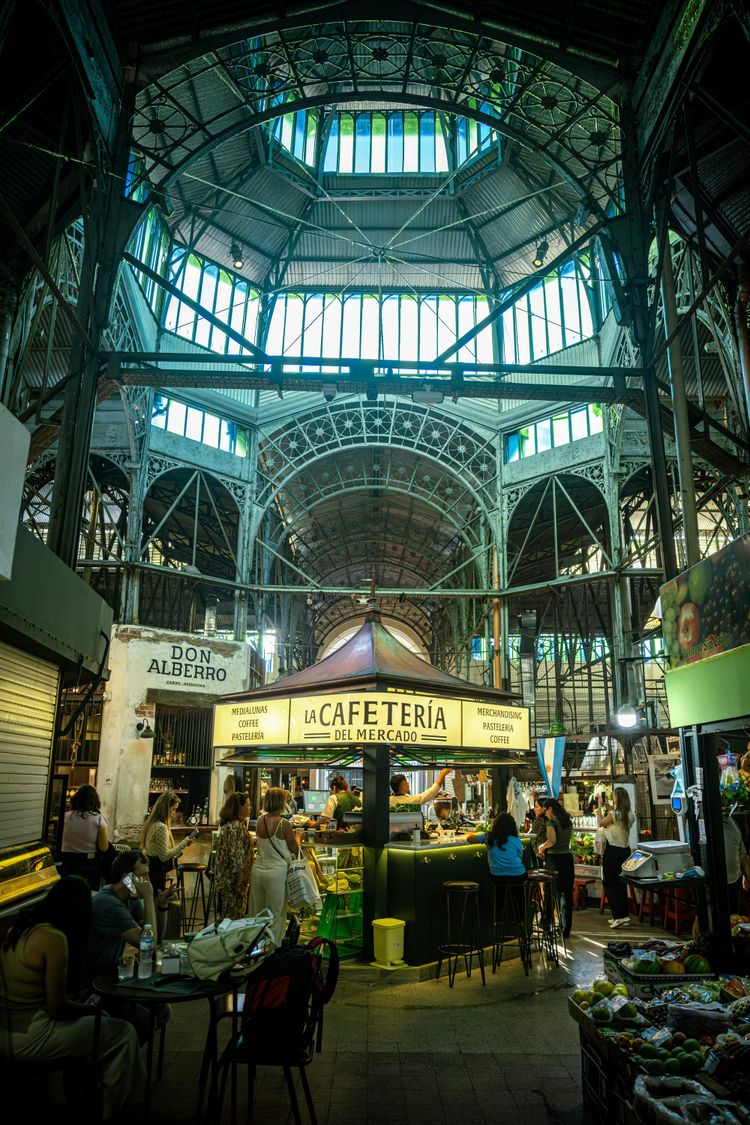
I want to travel more extensively, experience different cultures, and spend time in cities like Prague, Florence, or Buenos Aires.
That costs money too.
I want to learn new skills, experiment with technologies, attend workshops, and buy equipment when I need it.
Again, money.
I had escaped one trap only to discover another.
Previously, I had plenty of income but insufficient time.
Now I had plenty of time but insufficient income.
And the irony was impossible to ignore.
I had optimized for freedom so aggressively that I was gradually losing the financial means to exercise it.
Frugality is powerful. But beyond a certain point, reducing expenses further does little to expand your life.
Sometimes you need to increase your income instead.
Not to accumulate possessions.
To expand your possibilities.
Correcting the Model
I don't regret choosing time over money.
Those years gave me experiences I wouldn't trade away lightly. I learned, created, developed new skills, built friendships, and discovered how fulfilling an independently organized life could be.
But I now recognize that my economic model was incomplete.
I don't need to maximize income.
I need to generate enough sustainable income to support the life I actually want.
And that includes sufficient reserves, financial resilience, and the freedom to pursue experiences beyond my immediate surroundings.
Temporarily, I may return to conventional employment.
But I don't see that as returning permanently to the corporate lifestyle.
It's more like a visit.
My mind has already moved beyond that stage.
Over the coming years, I intend to develop more independent sources of income through teaching, educational products, and selective consulting.
I love sharing knowledge. I'll continue publishing reflections, ideas, and models simply because I find them worth sharing.
But I also want to create commercial offers that solve real problems and attract enough paying customers to support my independence.
The ideal isn't necessarily passive income in the strict sense. Even digital products require maintenance, marketing, and customer support.
What I want is income that doesn't require me to exchange most of my waking hours for money.
I don't necessarily need an extraordinary monthly income.
The exact amount matters less than the relationship between income, freedom, and the life I want to build.
If I eventually have a wife and children, that amount will change. If I relocate to a more expensive city, it will change again.
My financial requirements must adapt to my life.
Not the other way around.
And if my educational work eventually becomes enormously successful?
Wonderful.
Perhaps I'll travel more, teach more, or even build some of the ambitious institutions I've spent years imagining.
Perhaps I won't.
Having the resources to build something doesn't create an obligation to build it.
The purpose of earning more is to expand my choices, not to replace one demanding lifestyle with another.
What Is Your Freedom Number?
Money is a remarkable social invention. We collectively assign it value, and that agreement allows us to exchange goods, services, and labor.
But money is not the ultimate scarce resource.
Time is.
Bill Gates can buy extraordinary things. What he cannot do is purchase another lifetime.
Neither can you.
Yet many people spend decades maximizing their earnings without defining how much would actually be enough.
So here's my invitation.
Calculate your freedom number.
How much monthly income do you genuinely need for a comfortable, sustainable life?
What expenses could you eliminate without meaningfully reducing your happiness?
What experiences would additional income make possible?
And perhaps most importantly:
What would you do if you suddenly had 20 extra hours of free time every week?
Would you learn a language?
Spend more time with your children?
Travel?
Build something?
Fall in love?
Or would you struggle to imagine what to do without work occupying your days?
If the last question makes you uncomfortable, perhaps it's worth examining how much of your identity has become intertwined with your career.
I made the mistake of treating money as something I could largely stop pursuing once my expenses were low enough.
Now I understand that I need both.
Enough money to remain independent.
Enough time to experience life.
And enough freedom to decide how to use them.
The goal isn't to become rich in money or rich in time at the expense of the other.
The goal is to have enough of both to live deliberately.
That's the balance I'm now trying to build.