For years I used paid tools to build my CV.
I even recommended them to my students in one of my older courses.
In 2026, something shifted.
I needed a new CV for a specific role. Like before, I paid for a one-month subscription to get it done quickly. But this time, I noticed friction I had ignored for years:
- I have to pay every time I want to tweak my CV
- Or stay subscribed indefinitely
- And the final nail: I can’t fully control the template — someone else made the design decisions for me
That last point bothered me the most.
So I tried a different approach:
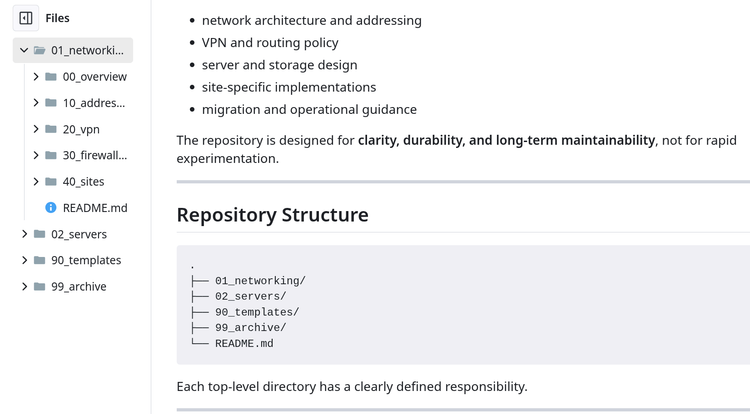
- a private Git repository
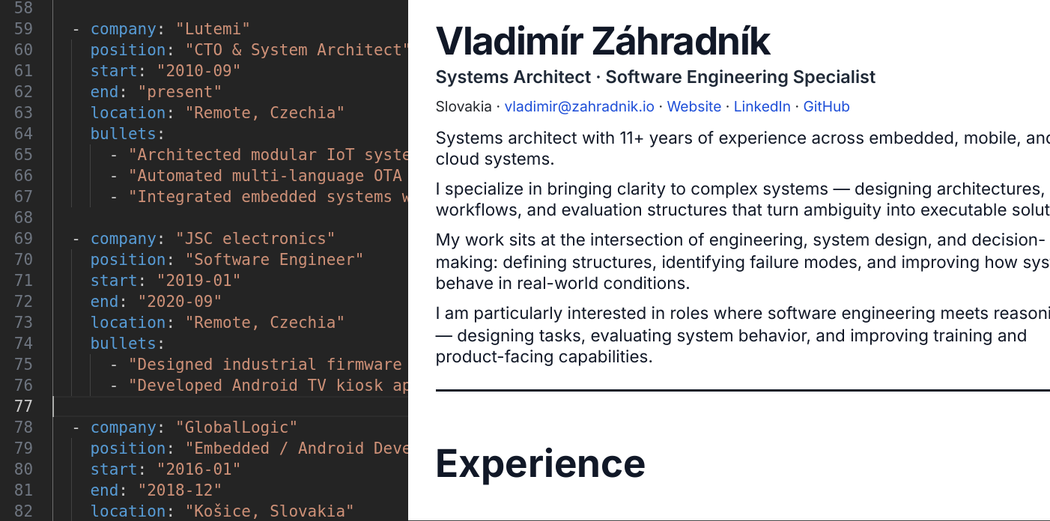
- CVs stored as YAML files
- rendered using Astro with a custom layout
(ChatGPT helped with the setup — I’ve heard Claude is even better for this kind of work.)
When I saw my CV as structured data, I knew this was the right direction.
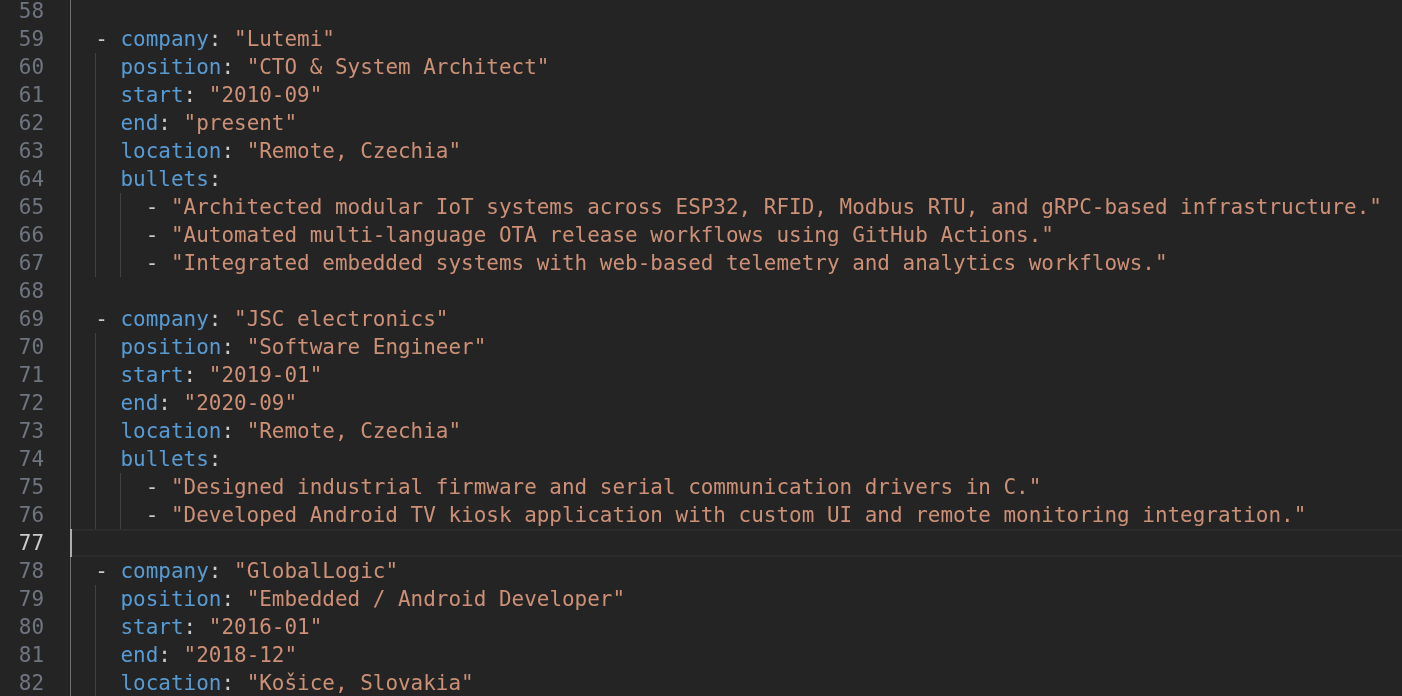
The content was no longer trapped inside a UI.
It became something I could version, reuse, and reshape freely.
This approach is not for everyone. But for a software engineer, it makes perfect sense.
And in the age of AI, even non-coders can build something like this with minimal effort.
Ironically, I spent most of my time not on the data — but on CSS.
Paid tools promise that your CV will stand out.
Sometimes, a simpler and less polished design stands out more.
And this time, it’s fully mine.