This is not a product review and not a prediction.
It is a personal audit of serious attempts at convergence I have touched over the years — and why, despite massive progress in hardware, the problem still isn’t solved in a way that works for real productivity.
The short version: convergence is not primarily a hardware problem. It is a workflow problem.
The History of Convergence
You don’t have to be a mad scientist to realize that even smartphones from five years ago are powerful enough to replace laptops for many tasks. CPU performance, memory, storage — all of that is already there.
What’s missing is not power, but fit.
Microsoft Lumia 950
When the idea was right, but the ecosystem wasn’t ready
I still remember walking into my telco operator and explicitly asking for a Lumia 950.
The sales assistant replied:
“But you know it’s not Android, right?”
Of course I knew.
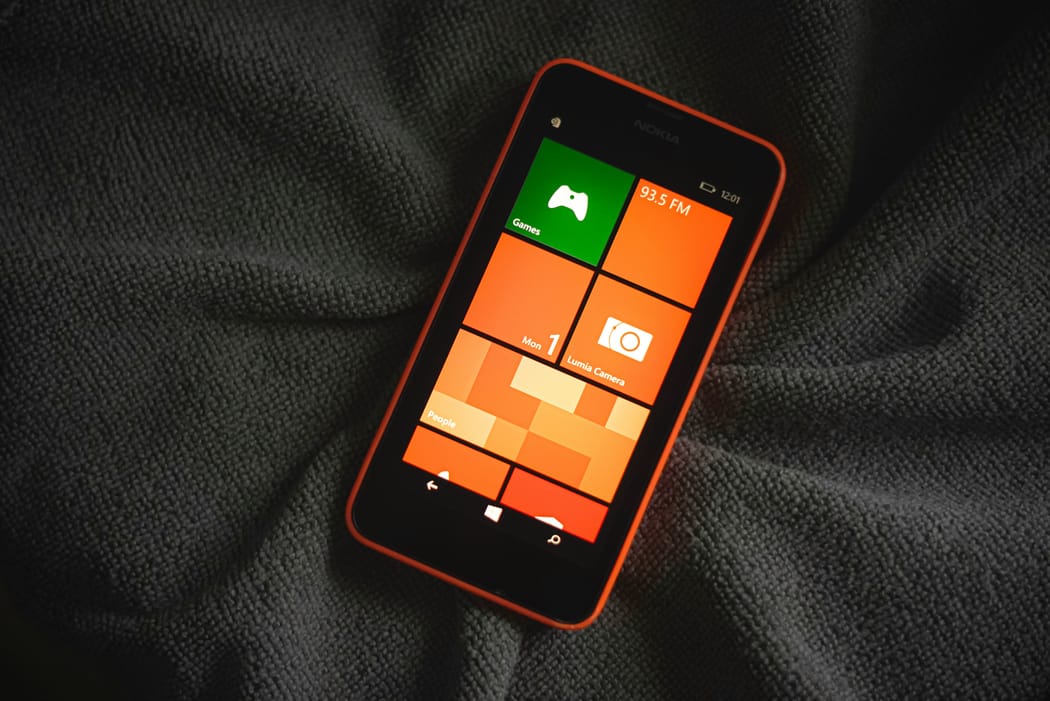
The Lumia 950 ran a new Windows Mobile based on Windows 10, promising ecosystem unification. One of its killer features was Continuum — a dock that would turn your phone into a desktop‑like system.
On paper, it was brilliant.
In reality, it was rough.
The phone rebooted randomly, glitches were everywhere, and while the Continuum UI looked like Windows 10, even basic browsing felt painful. The device overheated quickly, and I distinctly remember wondering whether it was actually charging while docked.
Late 2015 simply wasn’t the time.
Windows on mobile ultimately failed — a story worthy of its own article. It didn’t help that even Microsoft managers were tweeting from iPhones.
Android (Early Attempts)
Mirroring is not convergence
Android took a different path.
Instead of desktop modes, we got increasingly powerful phones capable of outputting video over USB‑C. My brother owned one of the early HTC devices that supported this. It was hot, buggy, and drained battery aggressively — but it worked.
That phone eventually met its end during an attempted repair. Midway through the process I realized I wasn’t fixing it — I was performing an autopsy.
Video output became common. Wireless display followed. Android Auto emerged.
But mirroring a phone screen onto a larger display is not convergence. It’s just projection.
Samsung DeX
The best consumer‑grade convergence so far — and why it still falls short
Ironically, the most convincing convergence so far didn’t come from Google — it came from Samsung.
Samsung DeX works. When I dock my Galaxy Tab S8 Ultra, I get a taskbar, resizable windows, and something that feels like a desktop.
For casual use — browsing, emails, light multitasking — it’s excellent.
But it’s not a laptop replacement.
I originally bought the tablet hoping it could serve as a thin client, connecting via RDP to my workstation. After a few weeks, the reality became clear: unstable connectivity while traveling makes this setup fragile. Eventually, I bought a laptop — one that later survived a shampoo accident while traveling from Bratislava.
Samsung DeX is miles ahead of stock Android.
It’s still not enough for sustained productivity.
Google Android (AOSP)
Convergence optimized for consumption, not production
For years, Android hid experimental desktop modes behind developer options. I tried them. I was never lucky.
With Android 16, Google is finally moving desktop support toward something usable. Reviewers are calling it the “next big thing.”
I’m skeptical.
At best, this puts vanilla Android roughly on par with Samsung DeX.
The fundamental issue remains: mobile apps stretched across large screens are still mobile apps.
True productivity requires different UX assumptions. Keyboard‑driven workflows. Precision. Density.
One concrete example: VLC. On desktop, I want the classic desktop UI. On mobile, I want the touch‑optimized version. I hate using the mobile VLC UI on a desktop setup.
Until apps support distinct desktop and mobile workflows — or systems can launch different variants automatically — convergence will remain shallow.
Linux as a Wild Experiment in 2026
Technically possible — practically painful
Linux promises freedom. In theory, it also promises convergence.
Ubuntu Touch supports convergence on select devices. I won’t comment deeply on its current state.
What I did test recently was KDE Plasma Mobile on a convertible laptop.
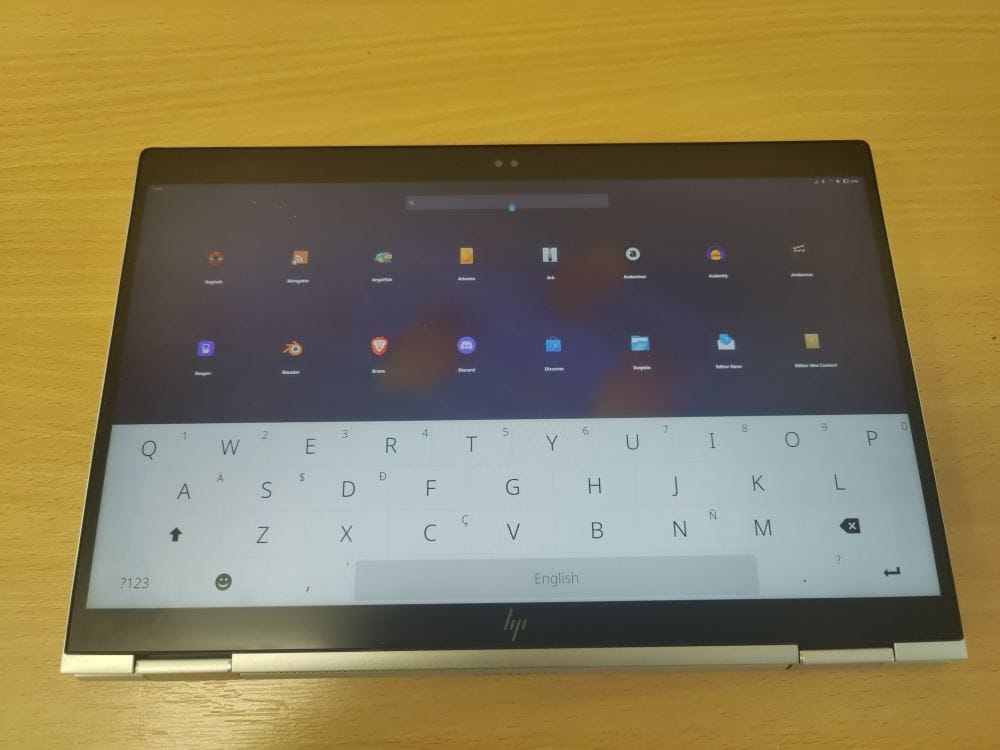
The basics worked: screen rotation, touch input, on‑screen keyboard.
Then the problems started.
UI elements were tiny. Gestures were simplistic. Parts of the interface crashed outright. At one point I couldn’t even shut the system down normally — only via terminal.
This wasn’t a final verdict on Plasma Mobile. It may work far better on phones.
But the pattern is clear:
- Desktop environments assume precision and density
- Mobile environments assume touch and simplicity
No environment today handles both flawlessly.
Even if the environment did, apps would still be the bottleneck. Installing GIMP on a phone makes for a fun demo — not a usable workflow.
NexDock and NexPhone
Interesting experiments — risky compromises
I own a NexDock — a laptop‑like shell powered entirely by your phone.
I first reviewed NexDock in 2021. Revisiting that article today shows how much of this problem was already visible five years ago.
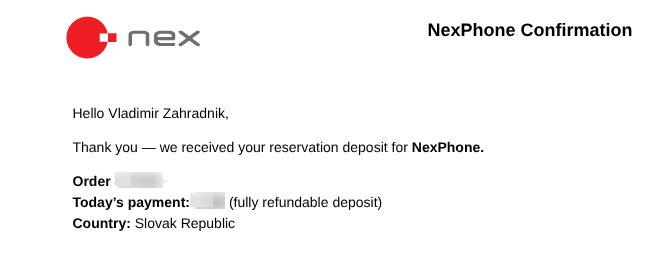
Recently, NexDock announced NexPhone: Android desktop mode, Debian Linux, and even dual‑boot Windows on ARM.
It’s ambitious.
It’s also deeply compromised.
Android desktop mode inherits all Android limitations. Debian may work for some workflows. Windows dual‑boot requires rebooting your phone to write a document.
A jack of all trades — master of none.
Still, such devices matter. Even failed experiments reveal where users want convergence to exist.
Despite my skepticism, I still pre-ordered NexPhone. I prefer to test ideas in practice, not just critique them from a distance.
Different Devices, Different Needs
Is full convergence possible?
I doubt it.
Is partial convergence possible for 70–80% of daily work?
Possibly.
High‑end tasks — video editing, gaming, heavy computation — will always require specialized hardware.
But writing, reading, research, light image work, calls? Phones can already handle that.
What’s missing is an ecosystem: docks everywhere, consistent UX, and honest expectations.
My Personal Vision of Convergence
I don’t believe I will ever fully replace a laptop.
But I might replace it for 80% of my daily work.
In offices I can imagine docks everywhere. Plug in, work, unplug, move on.
This is achievable.
It’s just not imminent.
postmarketOS on a Phone
Where experimentation becomes insight
As mentioned earlier, I plan to port postmarketOS to an older smartphone.
Unlike Android, it can run full desktop environments.
In theory, this allows real convergence experiments — not demos.
And here’s the founder takeaway:
When there is friction, there is potential.
By deliberately stripping convenience and working in constrained environments, you discover what’s actually broken.
Sometimes, that discovery becomes a product.
Final Question
Do you want convergence?
Or are companies building solutions for a problem that barely exists?
I’m genuinely curious.
Because if convergence matters, it won’t be solved by marketing.
It will be solved by people willing to live with the friction first.