Originally published on LinkedIn (reformatted for zahradnik.io / Medium)
There are three kinds of people when it comes to CliftonStrengths by Gallup:
- Those who have never heard of it.
- Those who argue with the results.
- Those who are so aligned that the test simply confirms what they already know.
I’m the third category.
When a friend told me about the test, I didn’t hesitate.
I bought it immediately, took it, and waited for the results.
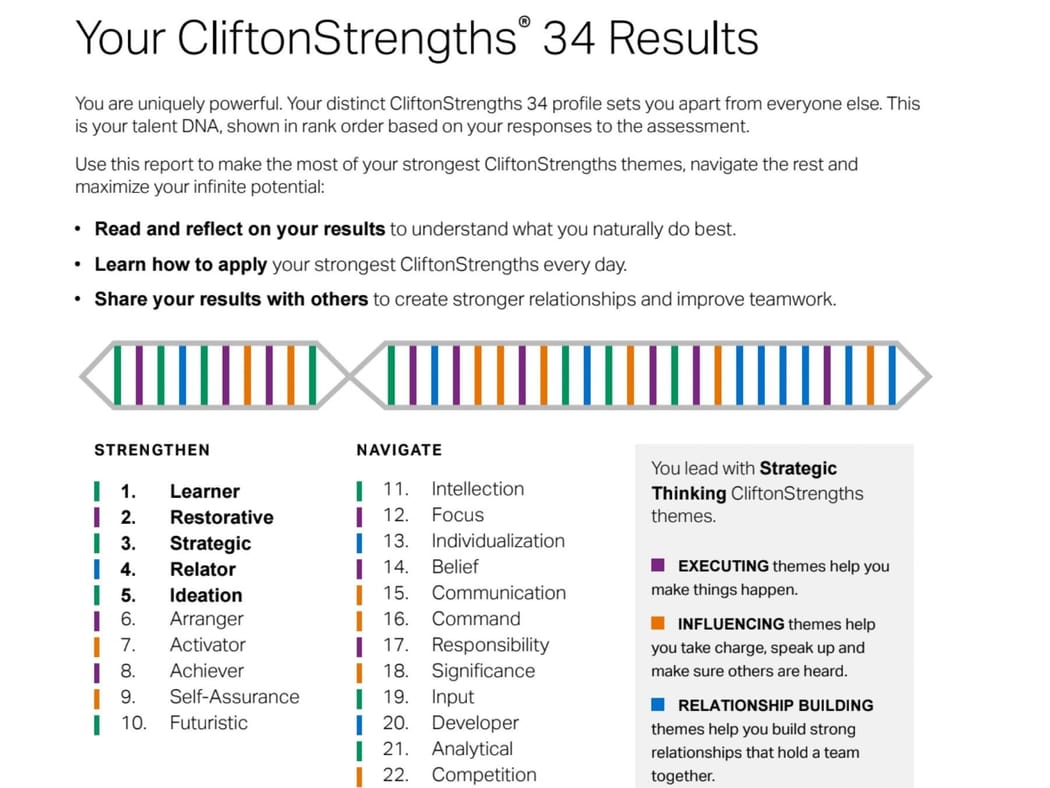
After seeing my Top 10, she just smiled:
“Expected. Learners always want to know.”
Later, she introduced me to her friend from Silicon Valley — also a Learner at the top.
When we met on Zoom, it felt like reconnecting with someone I’d known for years.
But this post isn’t about curiosity.
It’s about my #2 trait: Restorative — the strength that has shaped my entire professional identity.
I thrive in chaos.
Stability feels… boring.
This is why I’m excellent at starting things, and less optimal at maintaining them in a perfectly steady state.
This pattern follows me everywhere:
- I saved two Toastmasters clubs on the edge of collapse.
- I kept an entire division functioning during wartime, including nine Ukrainian clubs.
- I stepped into situations that were challenging, unclear, or near-failure — and I savored the work.
Here’s what I’ve learned about myself:
I naturally gravitate toward projects, systems, or organizations that are one step away from thriving — but stuck.
That missing 10–20%? I see it instantly.
A product with potential but poor positioning.
A team with talent but no structure.
A company capable of scaling but missing one decisive shift.
My instinct is always the same:
Fix what is broken — if people let me.
Sometimes the system is beyond repair.
But often, a few strategic interventions completely change the trajectory.
You can hire consultants to tune funnels, polish ads, or refine your brand.
But if your company is struggling — if something fundamental feels off — fractional advice won’t save you.
What I do is different:
- I look at your product, system, or organizational dynamics as a whole.
- I identify what’s leaking.
- I show what must be fixed.
- And I prioritize the steps in the right order.
I cannot save every organization.
But I can often give it the one insight it desperately needs.
Or, to quote Jerry Maguire:
“Help me help you.”