Originally published on LinkedIn (reformatted for zahradnik.io / Medium)
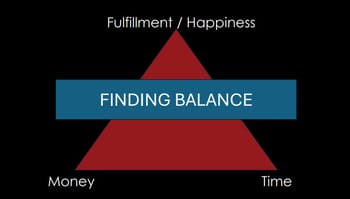
High-functioning individuals often pour everything into their intellect — building skills, sharpening expertise, optimizing productivity.
But many neglect the other two pillars that keep a human being whole:
the body and the soul.
Over time, that imbalance has a cost.
Mental clarity drops. Creativity stagnates. Leadership presence weakens.
You can be smart and still feel fragmented.
A few years ago, I chose a different path.
I decided to build myself as a whole system, not a single subsystem.
🜂 Body
Calisthenics, tango, and motorcycle riding became my primary training grounds.
They teach balance, coordination, micro-decision making, and embodied awareness — skills that translate directly into leadership, engineering, and consulting work.
🜁 Mind
I train neuroplasticity every day:
writing, designing systems, analyzing problems, and studying patterns across disciplines.
A sharp mind requires deliberate conditioning — the same way a strong body does.
🜄 Soul
The third pillar is harder to describe, but essential.
I read ancient philosophy and the classics because they anchor me — reminding me that modern complexity is just a thin layer on top of timeless human principles.
Cultivating all three is not a hobby.
It’s an operating system.
This is why I work the way I do — with clarity, depth, and stability.
And it’s why I help clients not only solve technical problems, but make better decisions, build stronger teams, and see the bigger picture.
Wholeness is not a luxury.
It’s a performance advantage.