In my last article, I wrote about the incentive behind my writing.
I write because I want to share my insights with the world, hoping there is something valuable in them. I would likely continue doing that even if almost nobody were reading me, because one never knows who might bump into the work ten years from now, or even later.
But my recent pivot, which I privately call the Iron Age, is different.
I am preparing to build a narrower public layer around AI. Internally, I think of it as a compatibility layer with a world that does not know how to employ a generalist.
That is not something I dreamed about doing.
It is a necessity.
I have many other topics I would rather talk about. Some of them are deeper, stranger, more personal, and more interesting to me. But they do not put food on the table.
So I am not standing between two doors.
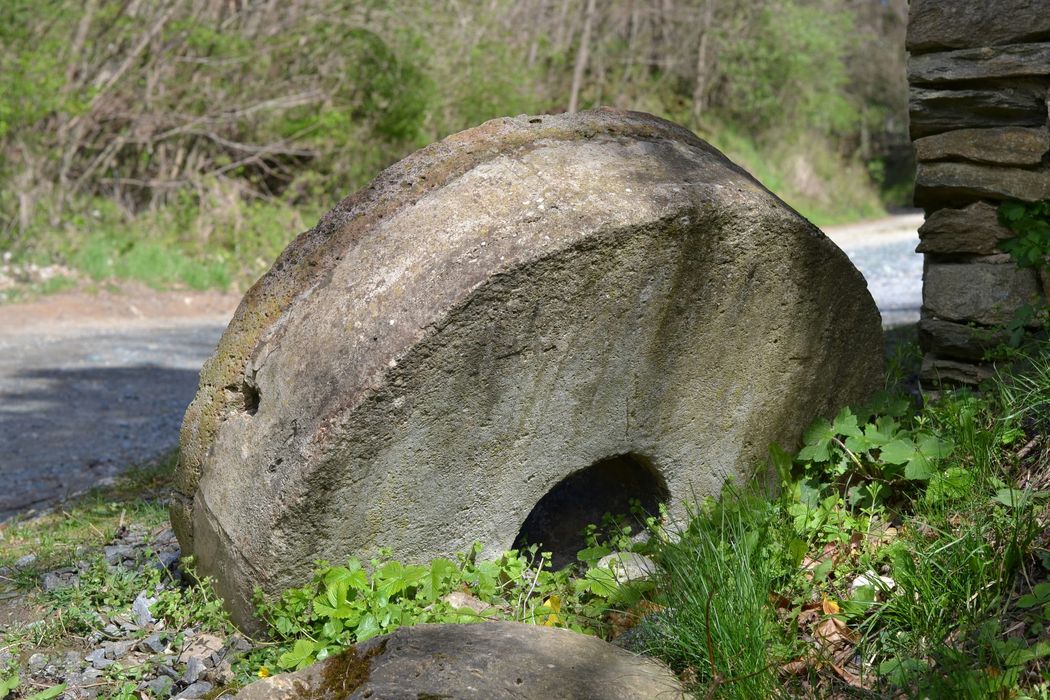
I am being ground between two stones.
Being ground from both sides
I have spent a lot of time in introspection.
I know myself extremely well.
That is why I am confident that I am facing two realistic scenarios.
The mandatory requirement is simple:
I need money to cover my needs.
Once that is accepted, I have two broad options.
The first option is to take some low-to-mid-effort job, perhaps even below my current standards, as long as it gives me more freedom and less responsibility for someone else’s business.
There is only one problem.
I have a track record.
Whenever I joined a company, the first few weeks were usually bearable. Sometimes even interesting. Novelty helped. Curiosity helped. Entering a new domain helped.
But after that, the pattern was almost always the same.
I felt heavily underused.
I was put in a box.
I was tasked with the single thing I had been hired to do.
And I had to watch most of my other talents go unused.
That was frustrating.
It still is.
The second option is to create a business capable of holding my whole self. Not just one narrow capability, but my broader talents, my cross-domain insight, my ability to connect ideas across software, organizations, culture, infrastructure, writing, and human behavior.
But here is the second stone.
In 2026, it is extremely hard to build something if you refuse to play the game.
And what is the game?
You have to use existing institutions and platforms to get amplified.
Some people are amplified by academia, then by videos, podcasts, or public controversy. Others are invited to the right podcast at the right time and suddenly gain an audience. Many more people try to build a brand in the endless sea of social media posts, where everyone is fighting for human attention, clicks, likes, comments, and shares.
I do not want to argue on social media just so people follow me.
I have better ways to spend my time.
That may sound like a cliché, but in my case it is literal. I learn constantly. I was always hungry for data, like Johnny 5, the robot who came alive.
So these are the two stones.
Either I accept a mediocre job where I am frustrated by wasting my talent.
Or I attempt to build a public brand in a hostile attention environment where depth rarely matters unless there is a clear incentive to care.
I truly dislike both options.
And yet I chose the second one.
Why?
Because there I still have at least a slim chance of building a future where I can feel whole while using my talents for something good.
That is how I arrived at my new AI-facing public layer.
An expert in AI-assisted engineering.
A person who helps others use AI without surrendering judgment, architecture, responsibility, or ownership.
I have my safeguards. I will not sell snake oil. I will not become a fake guru. I will not pretend that a clever prompt is the same thing as expertise.
But emotionally, it still feels like another misaligned job.
Except this time, even the salary is not guaranteed.
What would I do if money were solved?
I can be a minimalist when necessary.
I have lived that way for more than a year now. Not as a chosen aesthetic lifestyle, but as a survival strategy. It works, but it is not the same as freedom.
I sacrificed money for time.
Now imagine the opposite.
Imagine I had enough money to stop caring about money.
How would my life look?
I came up with a concept for a new type of company. I am trying to validate it, refine it, and perhaps show why it could be useful to others.
But if I had the money, I might stop caring whether the world ever accepts it.
The concept could remain on paper.
It could stay on my blog, hidden in plain sight.
Would that be a waste?
Not necessarily.
When I designed this organization, the process helped me understand many things about myself and the world. It gave me clarity. It produced language for patterns I had felt but could not yet name.
So even if nothing else came out of it, the time was not wasted.
And you know what?
I think I am content with that.
If money were solved, I would likely stop trying to prove that what I have may be useful to the world.
Instead, I would focus on things that enrich my life directly.
Body training.
Tango.
Motorcycles.
Flying a plane.
Hiking.
Languages.
Music.
Friends.
Books.
Films.
Private experiments.
My current life already contains many of these things. It is already worth living, as it is, right now.
The main problem is not emptiness.
The main problem is that misaligned work keeps interrupting it.
Leonardo da Vinci as a mirror
I am not saying I am Leonardo da Vinci.
Let us put his genius aside.
What interests me is the structure.
I see another fellow generalist who struggled with the normal world. He had to secure contracts. He needed patrons. He had bills to pay.
But where was his true passion?
In my opinion, it was in his notebooks.
His studies.
His sketches.
His investigations.
His canon.
If Leonardo lived today, would he have the patience to post on social media every day?
Would he argue in comment threads to grow his following?
Would he optimize thumbnails and hooks?
Or would he rather be left alone to sketch flying machines, study anatomy, investigate water, design mechanisms, and follow whatever captured his mind?
I think I know the answer, because I know what I would choose.
I continue building anyway
This is the part most romanticized historical movies skip.
Every success is usually preceded by a long, frustrating period when the work appears to happen in complete silence.
I even think there is a relationship:
the more unusual the thing is, the longer the silence lasts.
If you build yet another marketing academy, you already have a category. You have proven models, proven language, comparable competitors, testimonials, case studies, and a market that knows what it is looking at.
It is still hard.
But you are selling a narrow product inside an existing frame.
If you build something nobody has done before, you begin with almost nothing but concepts.
No category.
No proof.
No guarantees.
No easy way to explain why it matters.
No certainty that the thing you are building will work at all.
And yet those are often the stories that later appear in films.
Of course, nobody tells you in advance whether your story is one of them.
If I knew the ending, everything would be easier.
If I knew this would work, I would continue with calm conviction.
If I knew it was a dead end, I would stop immediately and save the time.
But I do not know.
Nobody does.
So I continue.
I continue because the alternative is to let someone else’s narrow box define the rest of my life.
I continue because even if the world never fully understands the work, the work has already changed me.
I continue because the possibility remains that this strange path may eventually become legible.
And if you are reading this, you are sitting in the first row.
I am glad to have you there.