I am a builder.
Since I was young, I kept learning, creating, and building things. Most of those efforts led nowhere in the external sense. They did not become companies. They did not become movements. They did not make me known.
But they taught me a lot.
Then came my first job, the realities of life, and the frustration of realizing that the world usually knows how to use you only when you fit into a box.
Otherwise, people do not know what to do with you.
I never planned to become an entrepreneur.
If I had found a job I genuinely loved, I might have simply remained employed. Employment is simpler in many ways. You join an existing structure. You do the work. You get paid. You do not have to build the container around yourself.
There are jobs I could imagine loving.
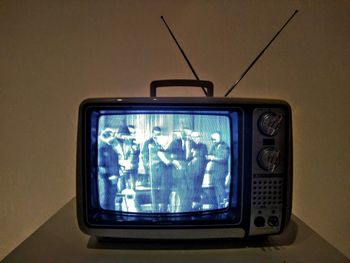
In the old days of analogue television, for example, there were crews working at transmitter facilities around the clock. With the digital age, only a fraction of that human presence was still needed. But that kind of work — technical, physical, responsible, slightly isolated, connected to infrastructure — could probably have kept me engaged for decades.
But that world is almost extinct.
So I tried to build my own.
I have had some successes, but almost always on someone else’s turf. I could contribute. I could improve things. I could teach, organize, solve, and carry weight. But when I left, the system remained theirs.
Recently, I also reflected on seven years of publishing without significant external impact.
These threads started to click into each other.
What Is a Complete Life?
No one gives you a definition of a complete life.
You have to discover what the question means for you.
My own reflections showed me something uncomfortable but clarifying:
I do not merely want to build because I like building.
I want to build because I want to teach.
Not in the shallow sense of selling a course that promises miraculous transformation in one week.
I mean real teaching.
Months, maybe years.
Guiding people through difficult transitions. Helping them unstick themselves. Sharing what I learned the hard way. Creating an environment where transformation is not just a marketing word, but an actual process.
When I look back, most of my strongest moments eventually converge on mastery and teaching.
Even my breakthrough achievements in Toastmasters were connected to this. I was not only giving speeches. I was helping people grow inside a system.
But it was not my system.
Once I left, I had nothing that continued.
That is the missing piece.
Right now, I feel that I have reached a point where my own life is, in many ways, complete.
Not finished.
Not perfect.
But complete in the sense that many of the flaws that once inhibited me are no longer running the system. I can refine my life, but I no longer feel trapped inside the same old loops.
It almost feels like cruising.
I enjoy what I do.
But I also feel like a fine-tuned engine running almost at idle.
I miss having a load worth carrying.
One Has to Know When to Stop
For a long time, I kept trying to build something that could teach beyond me.
Something with teaching in its core DNA.
But without external funding, without a real audience, and without enough pull from the world, such a project can remain barely past the concept phase.
The work may be real.
The thinking may be real.
The structure may be real.
But the external scope remains limited.
So I had to ask myself:
How much more?
How long can I keep pushing this carriage?
High-achievers are often praised for never giving up.
But that can become dangerous.
Some people would rather burn out than admit that something is not working. They turn persistence into a moral obligation. They keep climbing even when the ladder is leaning against the wrong wall.
I am a high-achiever too.
But I have built safeguards.
If I keep building for years and the results are still not there, something is wrong.
Maybe the world is not ready.
Maybe my entry point is wrong.
Maybe the form is wrong.
Maybe the timing is wrong.
Maybe the project matters, but not enough people care.
Whatever the reason, an honest attempt must have an honest stop condition.
At some point, if the result is still not there, maybe the right move is not to keep escalating.
Maybe the right move is to stop.
Capability Is Not a Debt
Do I have unusual capability?
Maybe.
Am I obliged to deploy it for the greater good of society?
No.
Capability is not a debt.
Yes, in the ideal case, I would teach.
I would build something that changes people. I would create a structure that outlives my own daily effort. I would transmit what I learned and help others move faster than I did.
That is still the preferred branch.
But I also have a life to live.
I would rather live knowing that I tried seriously and then moved on than keep chasing a dream until the end of my life simply because I could not bear to close the chapter.
So I set a timer.
And I introduced a name for what comes after.
Leonardo Mode.
Time Is Ticking
Here is the rule:
If, within the next three to five years, I do not see real signs that what I am building changes lives and can become sustainable beyond me, I stop pursuing the dream in its current form.
That sentence is heavy.
But it is also liberating.
Stopping the pursuit of a dream is not necessarily failure.
Never trying is failure.
Pursuing it forever without evidence can also become failure.
A serious attempt deserves respect.
But seriousness includes the possibility of stopping.
This is not cope.
Cope would be pretending that I never wanted the dream in the first place.
Cope would be saying:
I did not really care.
It was never important.
I am better off without it.
That would be dishonest.
The honest position is different:
I wanted it.
I tried.
I may have had the capability to affect society positively.
The world did not receive it in that form.
Now I must decide what to do with the remaining time.
I may have to live with knowing that I was institutionally underutilized.
But being underutilized by society does not mean being unused as a human being.
That distinction opens the door.
And through that door comes Leonardo.
Leonardo Mode
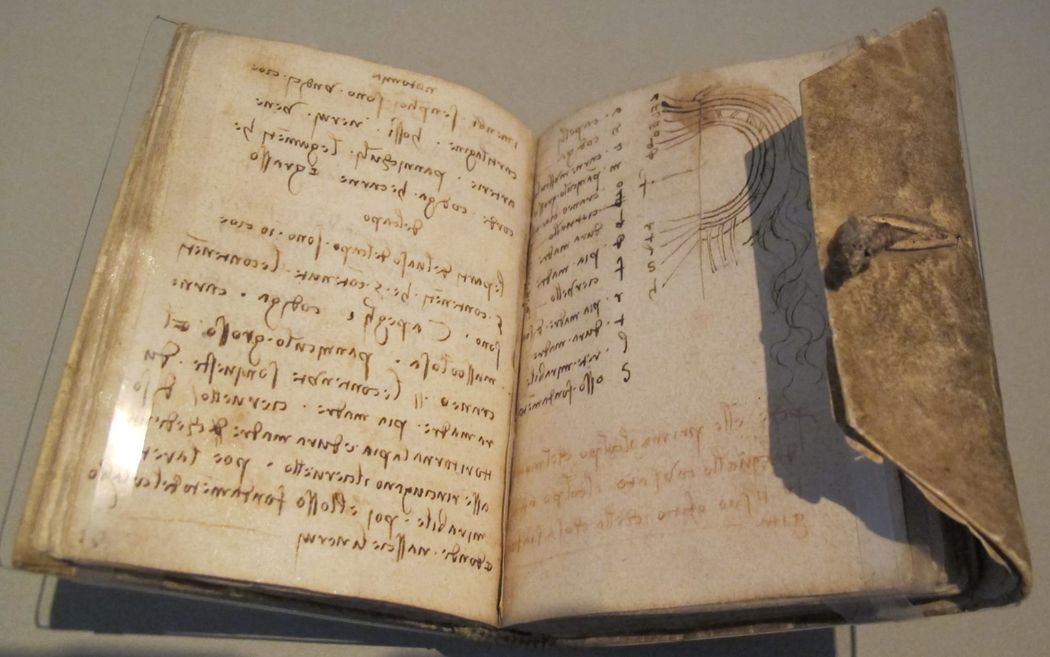
The name is inspired by Leonardo da Vinci.
Do not take this as a precise historical claim. Leonardo had bills to pay like everyone else. He had patrons. He accepted contracts. He lived inside the constraints of his time.
But as an archetype, he is useful.
What interests me is not the museum version of Leonardo, but the image of a person whose curiosity refuses to stay inside one narrow lane.
Art.
Mechanics.
Anatomy.
Engineering.
Music.
Observation.
Machines.
Drawings.
Notes.
Questions.
Some of his most precious work may have been created when nobody was looking.
The notebooks matter because they show a mind in motion.
Whether the historical comparison is fully accurate is not the point.
The lesson is this:
If the world does not know how to use your full range, arrange your life so the range can still live.
That is Leonardo Mode.
What Comes After the Honest Attempt
If the larger project does not become real enough, I do not want to spend the rest of my life mourning it.
I can preserve what was learned.
I can accept the missing branch.
And then I can reallocate my life toward direct exploration.
I can learn languages.
I can compose music, even if only for myself.
I can fly a plane.
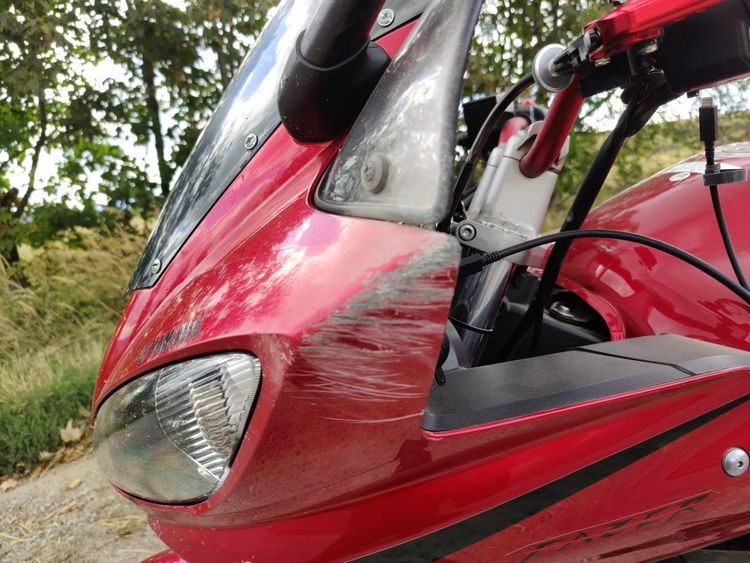
I can ride a motorcycle.
I can explore the boundaries of the human body through martial arts, tango, strength, mobility, and whatever else calls me.
I can study mechanisms.
I can build strange software.
I can make films.
I can travel.
I can write notebooks nobody is waiting for.
I can investigate history, machines, movement, sound, roads, people, and whatever else captures my attention.
Not everything needs to become a product.
Not everything needs to become a school.
Not everything needs to scale.
Some things are allowed to be valuable because the thing itself is valuable.
Learn Italian because Italian is beautiful.
Ride through mountains because the road is there.
Compose something because I want to hear it.
Dance because shared movement is rewarding.
Study an obscure mechanism because it is interesting.
Build something useless because building it changes the builder.
That is not wasted life.
That is a different measure of use.
The Life That Does Not Scale
Modern culture often treats scale as proof of value.
If it does not grow, sell, convert, trend, teach, employ, or influence, people quietly assume it is secondary.
But not every life has to become an institution.
Not every skill has to become a business.
Not every insight has to become content.
Not every project has to become a public offer.
A life can be underutilized institutionally and still be highly utilized as a human life.
Those are different metrics.
Institutional utilization asks:
How much external structure did this person create?
Human utilization asks:
How much did this person actually experience, learn, create, move, explore, understand, and enjoy?
A person can score differently on those two axes.
In the ideal case, both align.
But if they do not, the human life still matters.
Deadlines and Freedom
I hate deadlines.
But sometimes they are necessary.
Without a stop condition, a dream can become a tyrant. It can consume decades. It can turn every good day into a placeholder for the “real” life that is supposed to arrive later.
I do not want that.
My friend may keep building because he wants to prove to the world that he can have a company of his own.
I understand that.
But I am choosing a different safeguard.
I will take a serious shot.
And if the signs are not there, I may simply say:
enough
this chapter is closed
Then I can find a simpler way to earn money.
It may not fulfill me.
But if I preserve my minimalism, I do not need a life where work consumes everything. I can keep the cost of existence low enough that the rest of life remains available.
Then hobbies stop being mere hobbies.
They become the main terrain of sovereignty.
They recharge me.
They give direction.
They provide purpose without demanding an audience.
The Point of Leonardo Mode
Leonardo Mode is not retirement.
It is not passivity.
It is not sitting around and consuming entertainment.
It is an active life organized around self-directed curiosity.
It is what happens when a sufficiently developed person stops demanding that every capability become externally useful.
It says:
If the world does not want the full institution, the sovereign keeps the time.
That time can still be used.
Deeply.
Joyfully.
Intelligently.
Maybe even more freely than before.
The public project may fail.
The life does not have to.
Closing the Chapter Without Closing the Life
Building only for yourself is different.
But it can be liberating.
There is purity in doing something because you genuinely want to do it.
No market validation.
No audience capture.
No institutional pressure.
No promise that this will become anything larger.
Just the act itself.
The road.
The language.
The instrument.
The notebook.
The movement.
The machine.
The page.
The life.
That is still worth living.
So if the dream works, I will build it.
If it does not, I will not spend the rest of my life kneeling before its absence.
I will go Leonardo.
And I will keep living.