Read on...
People recently gave me some valuable feedback. They say I can tell such interesting stories that I could even teach Spanish and make it genuinely fun!
Let's try it out, shall we? 😁
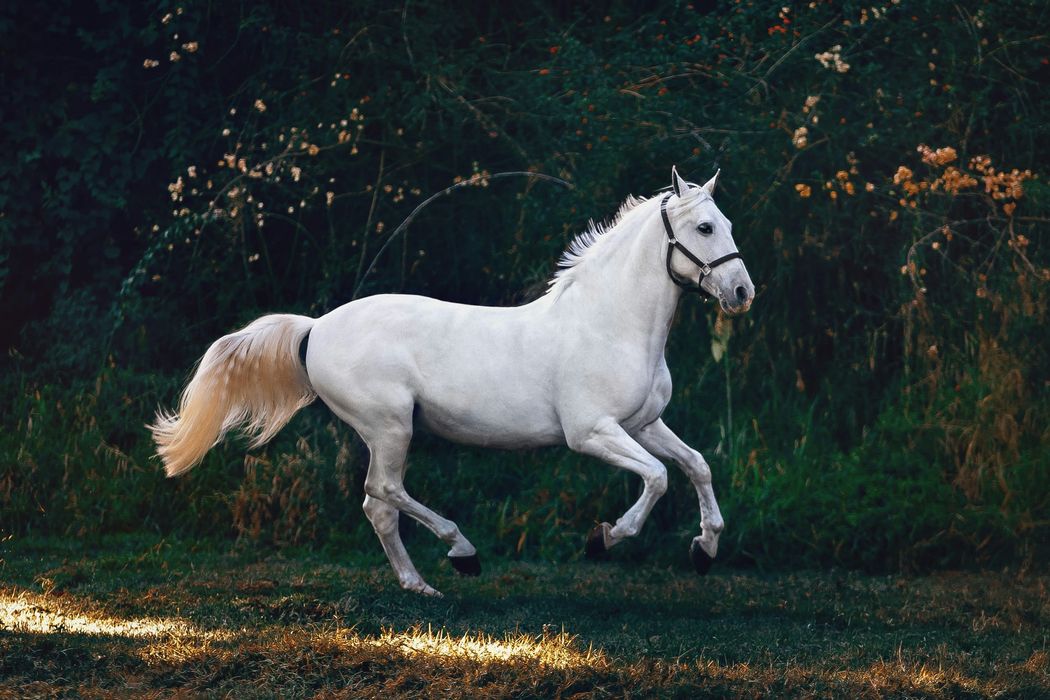
Today's topic: A horse in Romance languages.
We have to travel back in time. All the way to ancient Rome.
In classical Latin, a horse was called equus.
Sounds familiar? That's where we get equestrian. The word survived in the world of horse riding, even though it largely disappeared from everyday Romance vocabulary.
But the Romans had another word.
Caballus.
Originally associated with workhorses and less prestigious animals, caballus became the everyday word for a horse.
And eventually, it conquered the Romance languages.
Now you know the root. All you have to remember is how this one word transformed as Latin evolved into different languages:
🇮🇹 Italian: cavallo — The B softened into V, and the word retained its familiar Italian -o ending.
🇪🇸 Spanish: caballo — Almost the original Latin word! The B survived.
🇫🇷 French: cheval — It might look completely different. But the opening C changed its sound, the B became V, and the ending gradually disappeared. Same ancestor!
🇵🇹 Portuguese: cavalo — Very close to Italian, but with one L instead of two.
🇷🇴 Romanian: cal — And here's my favorite transformation. Romanian dropped most of the original word, but kept enough for us to trace its ancestry.
Five languages. One Latin ancestor.
But the horse is just the beginning.
Let's dig deeper.
Have you ever wondered where the English words chivalry and cavalry come from?
Yes. Our old friend caballus is back. 😁
A man riding a horse became associated with terms such as:
🇮🇹 Cavaliere
🇪🇸 Caballero
🇫🇷 Chevalier
Originally connected to horsemen, these words eventually acquired more prestigious meanings.
A knight. A gentleman. A man of honor.
For example, François Pignon, Chevalier de Longval. 😁
In Spanish, you can still hear:
Damas y caballeros!
Ladies and gentlemen!
And the French chevalier gave English another familiar word:
Chivalry.
The medieval ideals associated with knighthood: courage, honor, courtesy, and noble behavior.
Meanwhile, cavalry refers to soldiers who historically fought on horseback.
Be careful not to confuse it with Calvary, though. That comes from an entirely different Latin word meaning skull.
English has its traps. 😅
And now comes the artistic connection.
In Italian, cavalleria can refer to cavalry or chivalry.
And that brings us to one of my favorite operas:
Cavalleria rusticana — Rustic Chivalry.
A famous one-act opera by Pietro Mascagni.
Passion. Jealousy. Betrayal. Honor. A duel.
All the ingredients of a proper Italian tragedy! 🎭
And here's the plot twist...
This opera was the reason I started investigating caballus in the first place. 😄
One opera title led me to medieval knights, horses, Latin, and five modern languages.
Welcome to my learning process.
Now, if you've read this far, I bet you might not remember every spelling perfectly.
But you've probably started recognizing the similarities.
The words are no longer five unrelated pieces of information.
They're members of the same family, with a story behind them.
And stories make knowledge easier to remember.
This is why I learn Italian, French, and Spanish simultaneously. And why Romanian is becoming increasingly interesting to me.
These aren't isolated languages.
They're different branches of the same tree.
Once you begin recognizing the patterns, learning one language can help you understand another.
And who knows?
Follow enough rabbit holes and you might become a polyglot one day. 😁