I bought reMarkable 2 a few years ago. It looked perfect on paper:
- simplicity
- less fragmented thinking
- better focus
I saw it being used by countless founders around me, so I bought one too.
Only to find out it was mostly an expensive paperweight… for me.
reMarkable created an entirely new category of devices and they are still among the best products in that space. I genuinely respect what the company built.
But no matter how much I tried, what worked for many people simply did not work for me.
Non-linear thinking
My thinking is highly non-linear:
- I constantly move across multiple domains
- ideas connect into one giant graph of references
- one thought often leads to another seemingly unrelated system
- documents naturally reference each other
When I try to store my thinking on paper, I quickly end up with disconnected islands that still need to be digitized, linked, reorganized and integrated.
Think Obsidian — except scattered across multiple tools, notes and knowledge bases.
At some point I realized something important:
I would spend more energy adapting myself to the tool than adapting the tool to my own thinking.
reMarkable was simply incompatible with the way my brain naturally organizes information.
I could force myself into the recommended workflow, but eventually I would still need to split the notes into dozens of interconnected digital documents.
reMarkable was collecting dust — until now
I never sold the tablet.
I decided to keep it just in case I discovered a different use for it one day. It was still a beautifully built e-Ink tablet with excellent writing feel.
My first unusual use case was surprisingly simple:
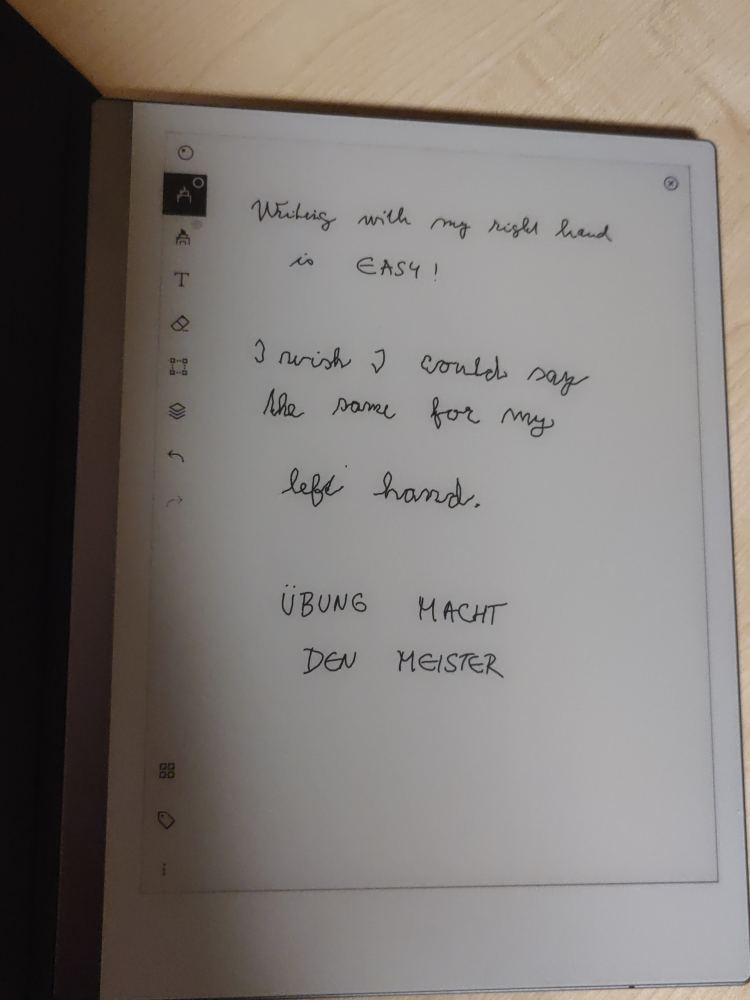
A reusable writing surface.
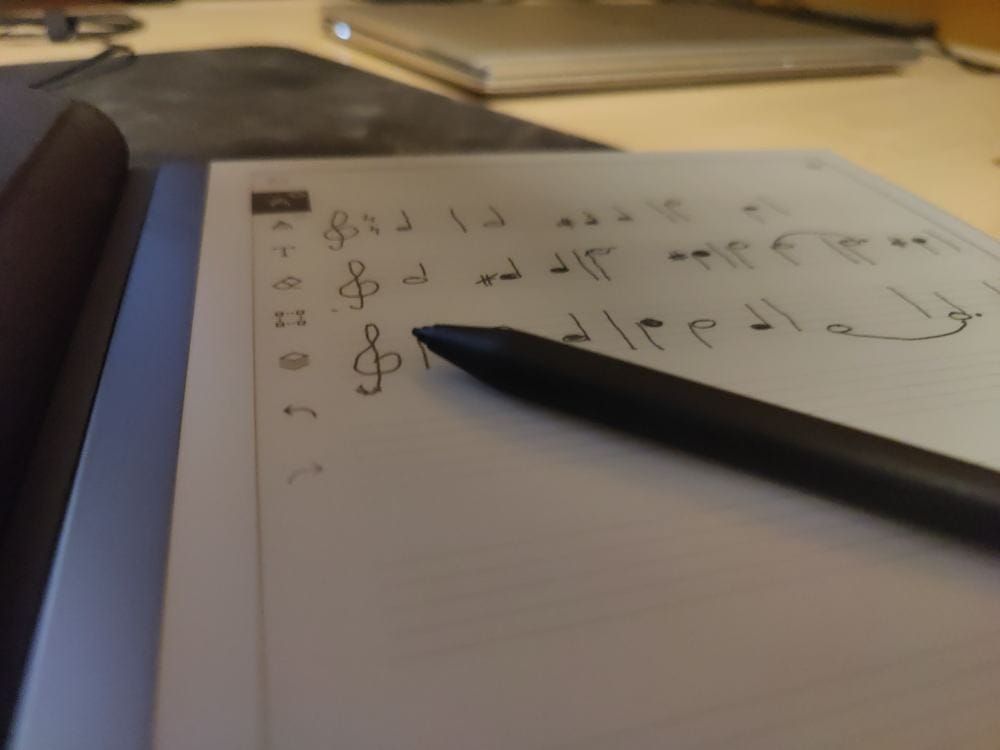
As part of my embodiment training, I was looking for ways to practice:
- writing with both hands
- Cyrillic handwriting
- sheet music notation
- freeform sketching
And suddenly the tablet started making sense.
I did not need permanent storage.
I did not need synchronization.
I did not need organization.
I simply needed a surface where I could:
- write
- erase
- start again
The practice itself was the goal.
Not the documents.
Storyboards
Another use case emerged recently.
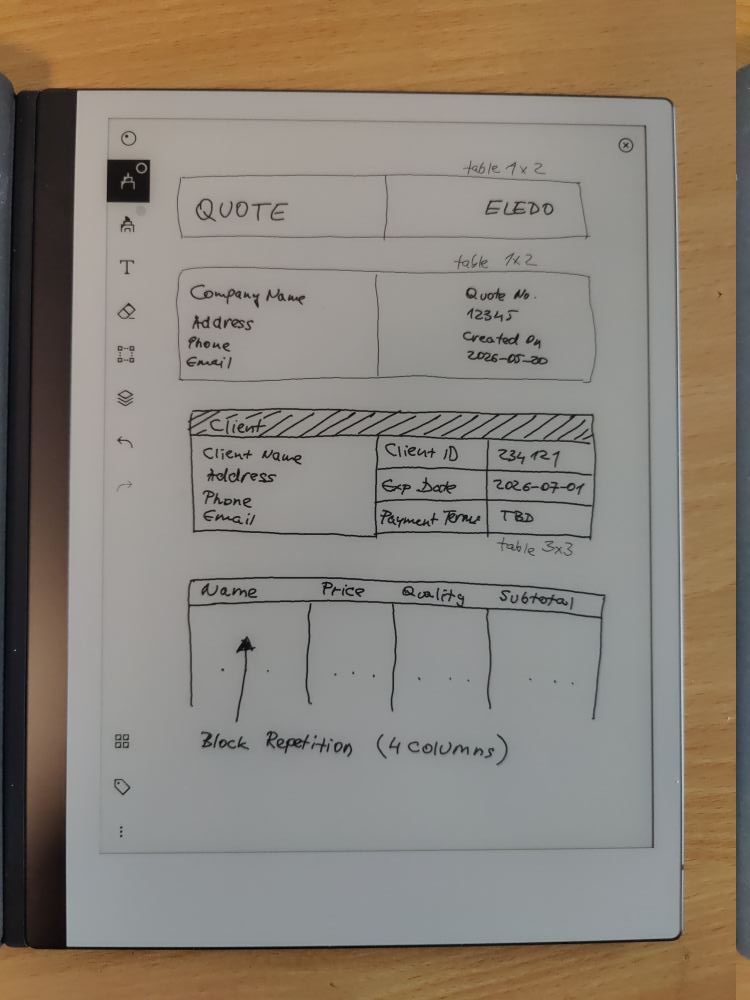
As part of educational video production for my client, some episodes require lightweight storyboards and visual planning.
And once again, I realized something:
I do not want to be limited by tools.
Sometimes I simply want to sketch an idea quickly, export a PDF and attach it to the production document.
That is enough.
Why should I open Figma for low-fidelity concept sketches if pen and paper already solve the problem?
Figma absolutely has its place.
But one of the most underrated skills in systems design is choosing the right level of complexity.
In this case:
simplicity and low-fidelity sketches win.
A complementary story from my friend
I have a friend who got his reMarkable last Christmas.
At first he was just as confused as I was.
But unlike me, he committed to using it consistently for at least 30 days.
Within a month he developed his own workflow and the device became genuinely useful to him.
In fact, he eventually designed a custom interactive calendar template:
- handwritten notes
- clickable navigation between sections
- paper-like workflow combined with lightweight interactivity
A simple but polished PDF built specifically around his needs.
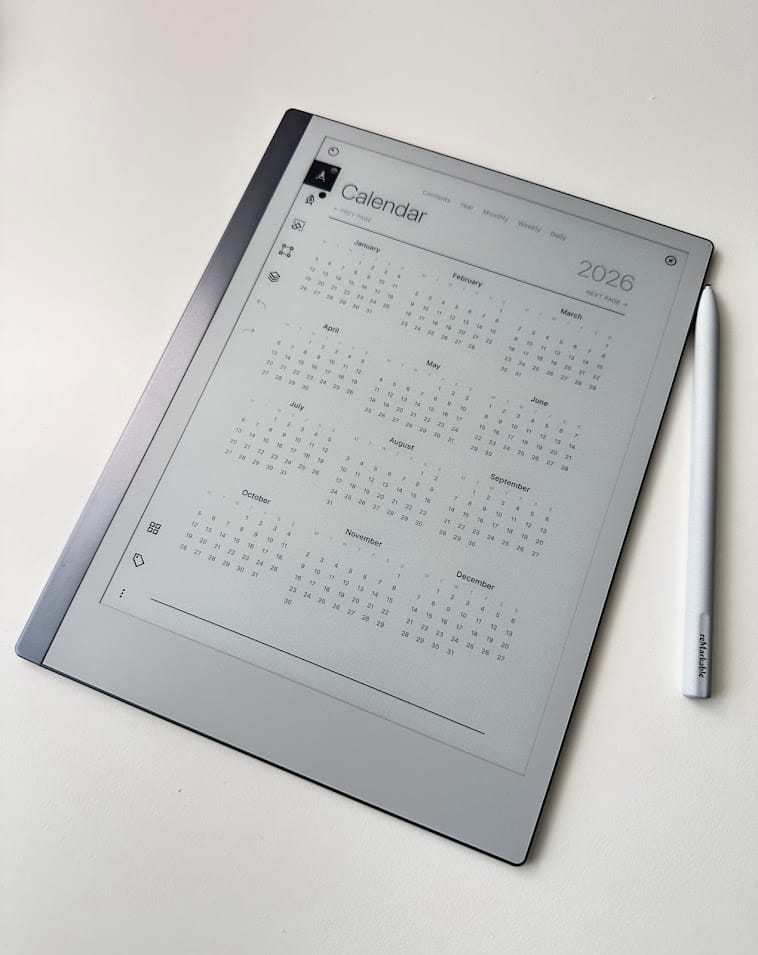
Soon he realized other people were interested in it too.
And suddenly the tablet itself became a trigger for creating a small digital product.
I love stories like this.
My friend proved something important:
reMarkable truly is remarkable.
Just not entirely for me.
Tools should adapt to humans
What fascinates me most is not the tablet itself.
It is the broader lesson.
Modern productivity culture often assumes that if a tool works for enough people, it should work for everyone.
But cognition is not standardized.
Some people thrive with:
- notebooks
- linear structure
- constrained systems
- minimal interfaces
Others naturally operate through:
- networks
- references
- layered systems
- interconnected graphs of ideas
Neither approach is wrong.
The challenge is discovering which tools amplify your thinking instead of fighting against it.
And sometimes the best solution is not using a tool the "correct" way.
Sometimes the best solution is repurposing it entirely.
I would genuinely like to hear your experiences.
Have you tried reMarkable or similar tools?
Did they work for you?
And if not — what did you end up using instead?