Someone once sent me a link to a LinkedIn Speak Translator.
Its sole purpose was to take a normal sentence and convert it into the polished corporate dialect that somehow became the default language of professional networking.
A sentence like:
I attended a conference and learned a few useful things.
Would become:
I’m thrilled to share that I recently attended an incredible conference where I had the privilege of connecting with exceptional professionals and gaining game-changing insights! 🚀
The funny thing is that both sentences communicate roughly the same information.
One simply uses three times as many words.
Extracting the facts
Let's look at a typical example:
I’m thrilled to share that I recently attended an incredible IT conference.
The energy was electric and the insights shared by the speakers were truly game-changing.
Now let's remove the decoration and keep only the facts.
What actually happened?
- Someone attended an IT conference.
- They learned something.
- They met some people.
That's it.
The entire paragraph collapses into three simple statements.
This is not necessarily dishonest.
It is simply abstract.
And abstraction is everywhere.
The young speaker
In February 2026, I coached at a paid speaking workshop.
One of the participants was a young man who had a habit of speaking almost entirely in abstractions.
Every speech contained phrases like:
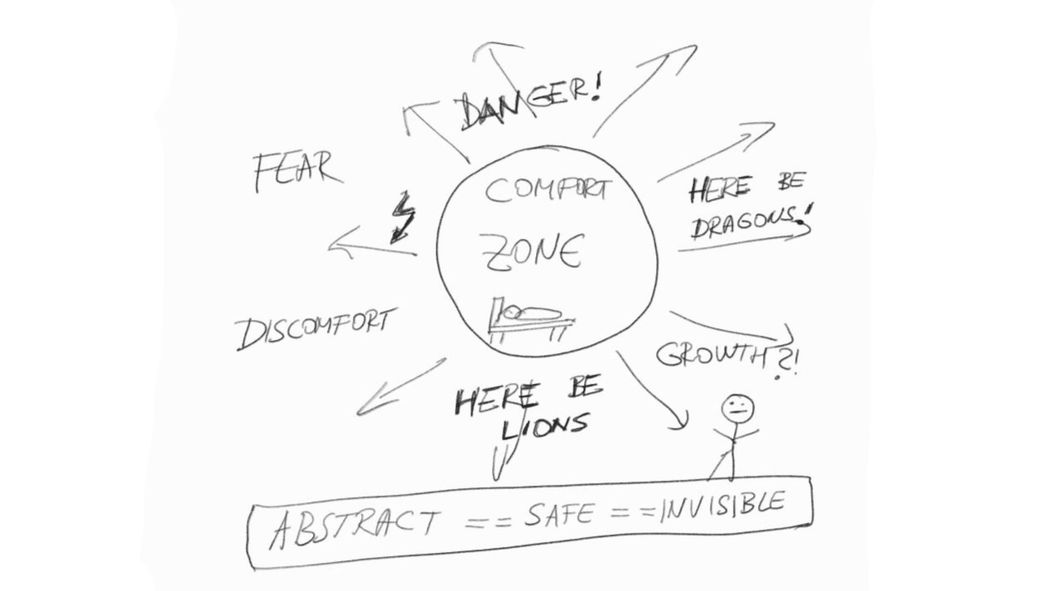
I want to cross my comfort zone.
I want to become a better version of myself.
I want to make decisions that improve me.
The sentences sounded intelligent.
They sounded professional.
They sounded like something you might read on LinkedIn.
Yet they communicated almost nothing.
So I stopped him and asked:
What does "comfort zone" mean in your case?
Silence.
Not because he lacked an answer.
Because he had never translated the abstraction into reality.
Abstract is safe. Abstract is boring.
People often speak abstractly because abstraction protects them.
Compare these two sentences:
I wanted to improve my communication skills.
And:
I was terrified to speak to strangers.
The first sentence sounds professional.
The second sentence sounds human.
Or this:
I wanted to expand my network.
Versus:
I felt lonely and didn't know how to start conversations.
The first sentence hides the struggle.
The second reveals it.
And that is precisely why the second creates connection.
Stories live in specifics.
Abstractions are summaries.
People don't remember summaries.
They remember stories.
Specific is relatable
Imagine somebody says:
I crossed my comfort zone.
What does that mean?
Did they move to another country?
Start a company?
Speak in public?
Approach someone attractive?
Quit their job?
We have no idea.
Now consider this version:
I always felt awkward in groups.
While everyone else seemed to belong naturally, I felt more like an observer of life.
One evening I walked into a networking event, stood by the door for five minutes, and finally forced myself to say "Hi" to a stranger.
Now we understand.
We can picture it.
We can feel it.
We can remember it.
The second version is not stronger because it uses better words.
It is stronger because it uses real ones.
Returning to being kids
Identifying abstraction is only half of the challenge.
The harder task is learning how to think concretely again.
My advice is unusual.
Take a sheet of paper.
Take a pencil.
Start drawing.
Then read your speech one sentence at a time.
Ask yourself:
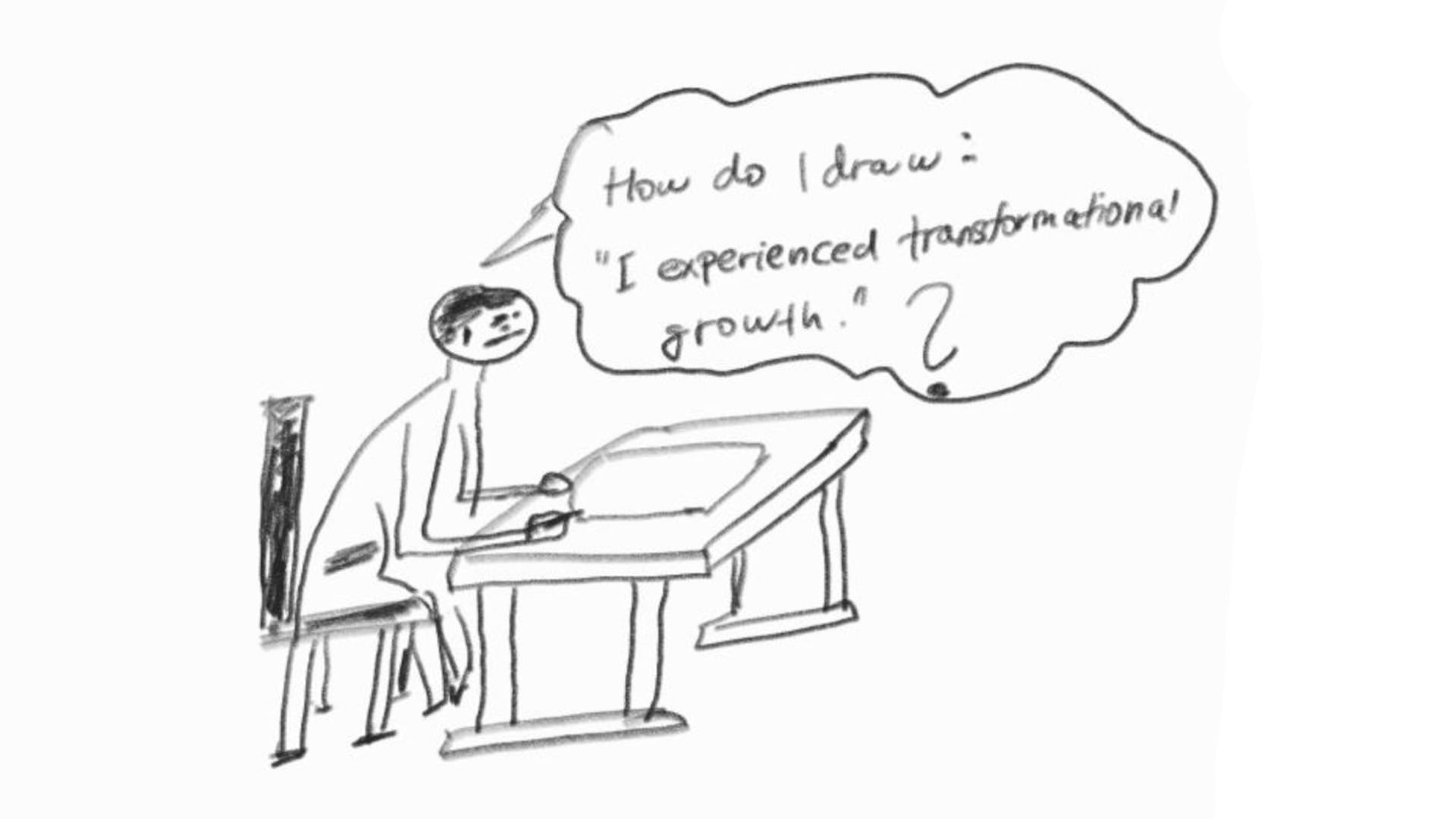
Can I draw this?
For example:
I experienced transformational growth.
Can you draw it?
Probably not.
Now try:
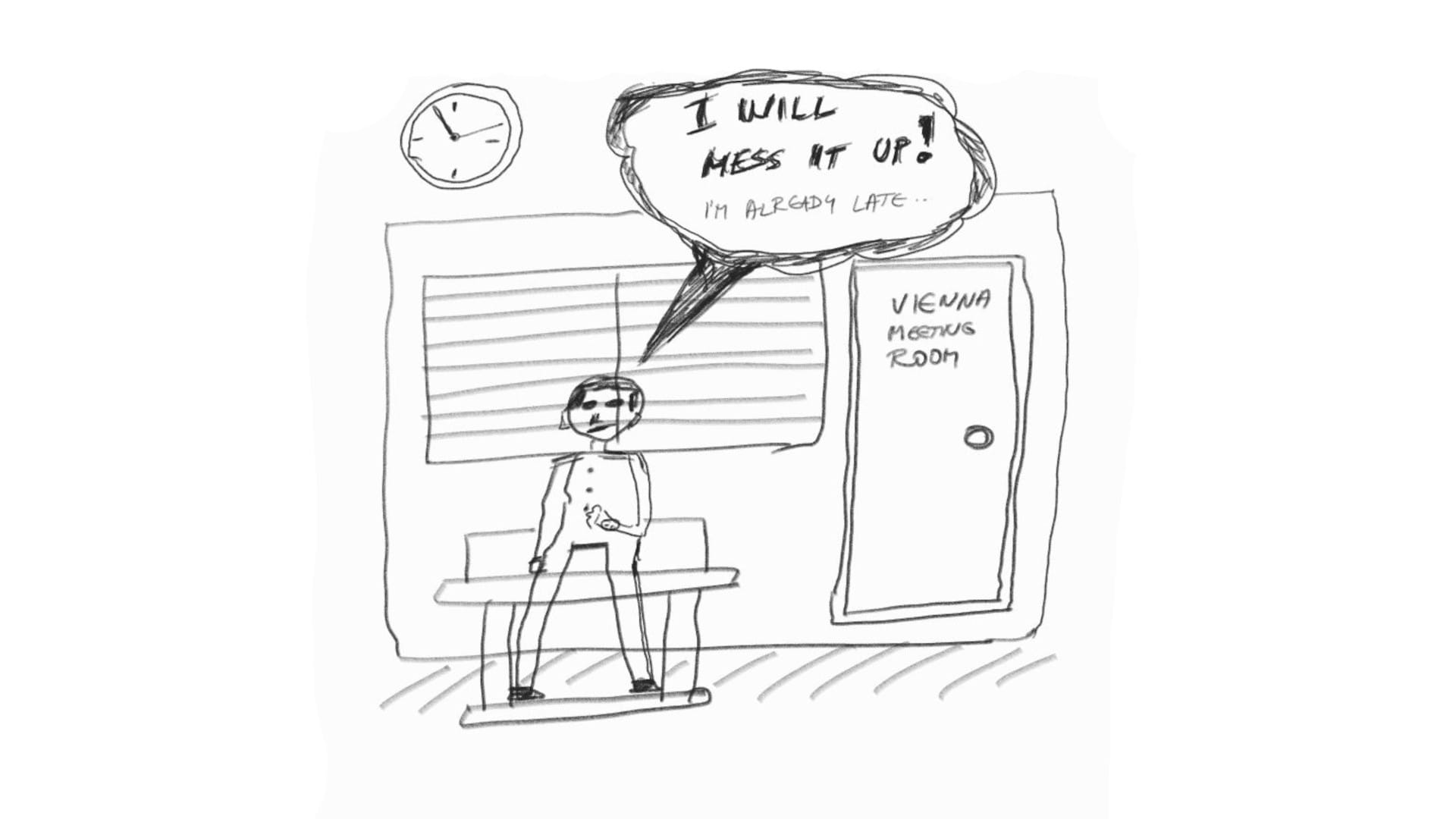
I stood outside the meeting room for ten minutes because I was afraid to walk in.
That can be drawn instantly.
A person.
A door.
A meeting room.
A moment.
A story.
Children naturally understand this.
They don't say:
I encountered interpersonal difficulties.
They say:
Nobody wanted to play with me.
Children speak in pictures.
Adults often replace pictures with concepts.
The result sounds sophisticated but becomes increasingly difficult to connect with.
The drawing test
Whenever you write an article, prepare a presentation, or tell a story, try a simple experiment.
Take your key sentences and ask:
Can somebody draw this?
If the answer is no, the sentence may still be useful, but it is probably too abstract to carry emotional weight.
If the answer is yes, you are likely speaking about something real.
Something tangible.
Something memorable.
Because stories are pictures transferred between minds.
And when it comes to storytelling, concrete beats abstract every single time.
A simple rule
If your audience can draw your sentence, they will remember it.
If they cannot draw it, they will probably forget it.