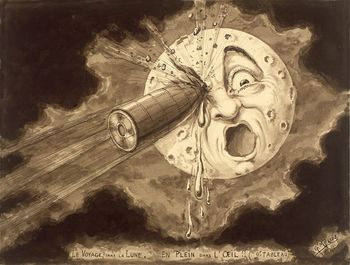
Yes, it is true.
A software engineer realized he thinks in scenes naturally and likes movies more than a casual viewer.
I already did my homework and found out my journey might be unusual, but not impossible.
For one example, look at the origins of Joseph Kosinski, now famous for Tron: Legacy, F1: The Movie, and my personal favorite, Only the Brave.
He changed careers later in life from architecture.
Unusual.
But possible.
Storytelling Instead of Facts
Today at a Toastmasters meeting, we had an impromptu Table Topics speech marathon.
I got a topic. Something about being successful.
I started with the LinkedIn bubble and the definition of success through money and status. It was partly a critique, partly an observation.
I wanted to build a bridge into this idea:
There are as many definitions of success as there are people living on this planet.
Success means a different thing to different people.
And then something unexpected happened.
I was literally in the middle of my speech.
I was speaking, looking at the audience, delivering the idea, and somewhere in the back of my head, I pulled up a movie.
Mr. Holland’s Opus.
A story about a man who seemingly sacrificed his life to take care of his family. Instead of becoming a world-famous composer, he became a teacher. What was supposed to be temporary became permanent.
Was he successful?
You tell me.
But the story about Mr. Holland is not the main story of this article.
What I realized is that I communicate more and more through stories instead of plain facts.
For example, I recently mentioned to someone that I have a pen name.
And instead of simply saying what it was, I told a story about how I spent four days choosing it.
That seems to be my natural direction now.
Stories first.
Facts inside them.
How to Demonstrate My Touch with Reality? With Facts Wrapped Inside Stories.
Anyone can say:
I want to be a famous director.
Would you believe such a person?
I am a dreamer myself, but I had my lessons.
Dreams are nothing if they are not grounded in reality.
So when I spoke about this direction, I did not present only the dream.
I presented constraints and a roadmap, wrapped inside stories.
The constraints were roughly these:
- I am 38 years old. Attending a film school at my age is not the right option for me. I am not an inexperienced eighteen-year-old learning the craft from zero. I am learning how to apply decades of experience from another domain.
- I do not want to rely on external funding. I do not reject it, but I want to be able to produce films with it or without it. That means I need to secure funding elsewhere. Consulting services? Wink, wink.
The roadmap was roughly this:
- I will fund films from activities that already earn money today. I do not need millions to start. Ask Robert Rodriguez about his first film, El Mariachi.
- YouTube becomes my training ground. A free distribution channel, but also a place for brand building and repetition.
- I will start with shorts. Dozens of shorts. Maybe hundreds. I will accumulate experience before even attempting to make a ninety-minute beast.
- Animation is cheaper than people. That is why my first attempts will likely be animated shorts. Think early Pixar or Tim Burton. Only later will I experiment more seriously with live action.
When you join the constraints and the roadmap, one thing should become clear:
I have thought about this.
I am not simply hoping to become a director.
I am directing my way into becoming one with what I have today — my previous experience, my current skills, and a career that still pays me.
The best time to start was before I studied engineering.
The second-best time is now.
And stories seem to be a more effective way to talk about this than simply listing facts.
People have always preferred stories.
Stories trigger imagination.
Guess what an Excel table triggers.
Conclusion
Maybe I simply revealed what was always inside me and finally trusted myself more.
A year ago, I was already living in stories internally, but my day-to-day communication was still more factual.
Now it seems I have loosened my mind.
People around me seem to care more deeply about what I say, and I believe one reason is that I started using stories, imagery, and metaphors as first-class citizens, not as an afterthought.
Which brings us to Steve Jobs — the founder of Apple and Pixar Animation Studios.
But that is a story for another day.
Un film de Diane Chambers.