I have seen this in Toastmasters hundreds of times.
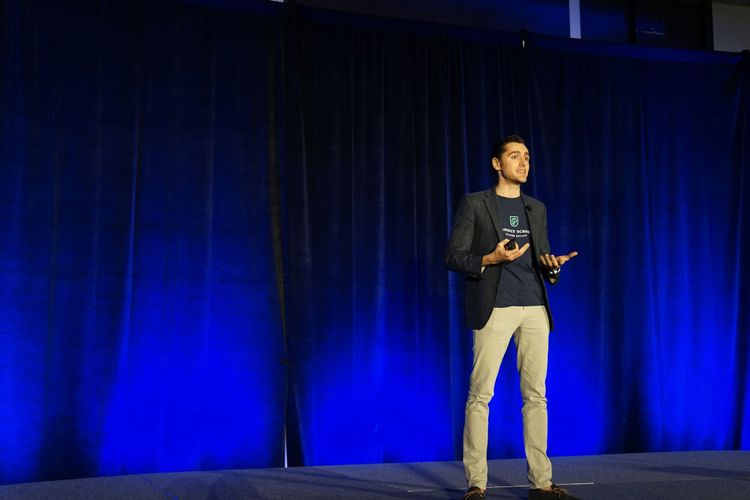
A guest comes to the meeting, dares to walk on stage for the first time, and suddenly the body changes.
Typical examples:
- hands behind the back, legs close together, almost no movement;
- hands protecting the torso, narrow stance, reduced gesture;
- stiff posture, defensive stillness, eyes searching for somewhere safe to land.
This is not only about speaking skills.
It is about exposure.
Why does this happen?
Take this insight with a grain of salt. I am not a behavioral psychologist.
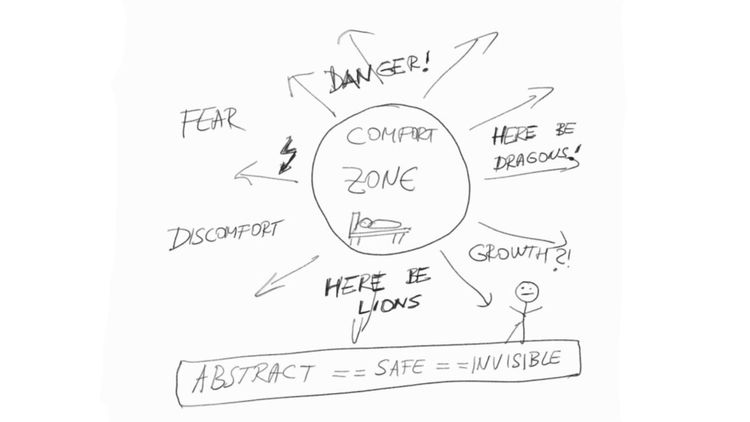
But I believe humans naturally protect themselves from exposure.
Standing alone in front of a group may be normal in a conference room, but the body does not always treat it as normal. The rational brain may understand that nothing dangerous is happening. The nervous system may not agree.
Having fear from standing in front of people is not rational in the modern sense.
But that does not mean the fear is not real.
In Toastmasters, we learn to calibrate that fear. Some of us eventually turn it into excitement. The audience stops feeling like a threat and starts becoming energy.
But many speakers do not give talks as a hobby.
They are simply asked by their employer to present at a conference.
That is why this talk from KotlinConf caught my attention.
The KotlinConf talk that triggered this observation: notice how the speakers’ bodies change when they move between open stage exposure and the protection of a stage object.
Notice how the speakers behave on stage. In particular, notice the difference between standing in open space, exposed, and standing behind an object.
The body changes.
It is a day and night difference.
The lectern as a stage container
While I barely experienced lecterns in our Toastmasters clubs in Slovakia or Czechia, I know they are common elsewhere. They appear in many official Toastmasters educational videos, and there is probably a reason.
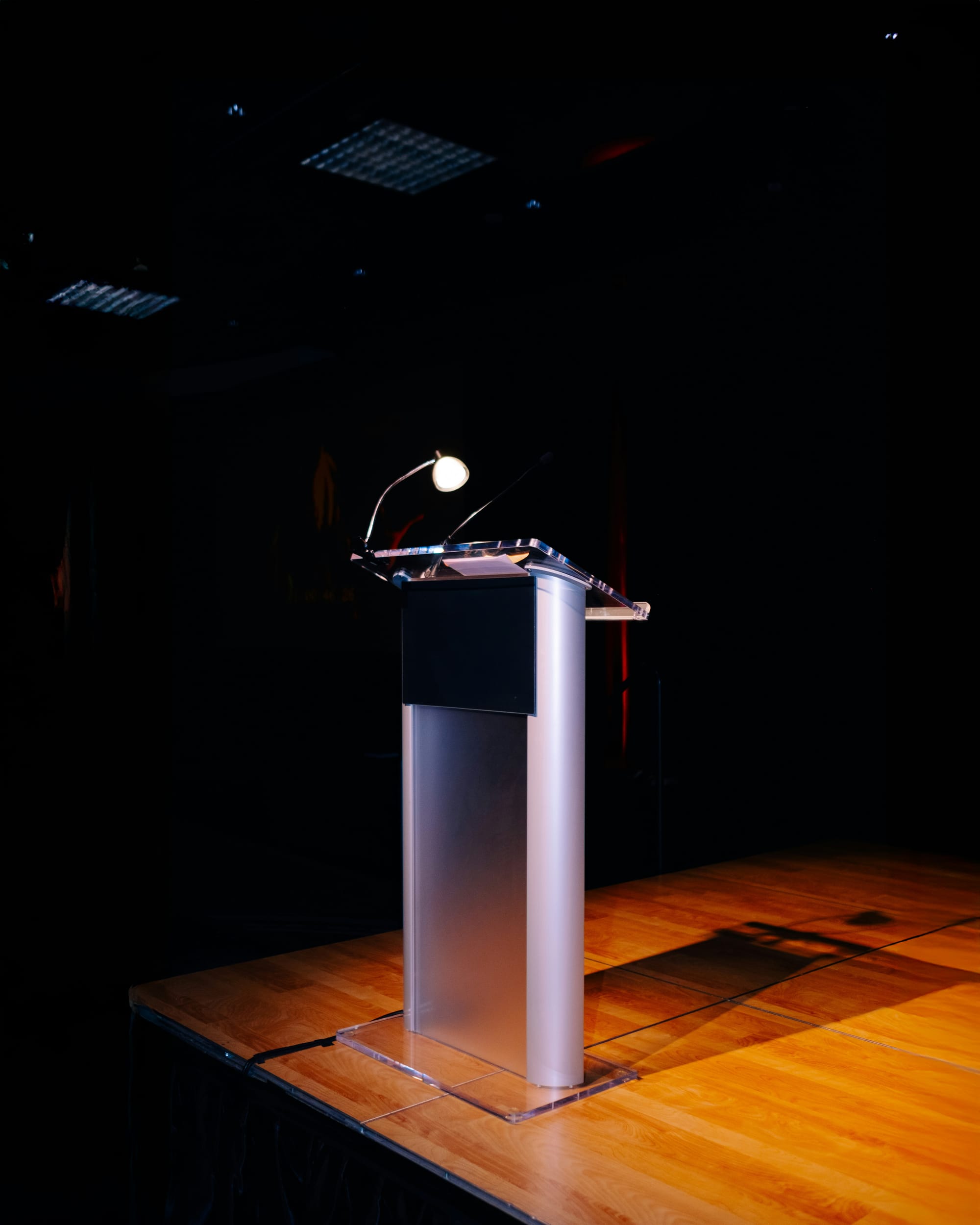
Once we stand behind a lectern, desk, or any similar object, we can suddenly feel protected.
The lectern is not only furniture.
It can become:
- a shield,
- an anchor,
- a boundary,
- a note station,
- a place for the hands,
- a psychological container.
For some speakers, this is not hiding.
It is support.
The body feels safer, so expression becomes easier.
Why do some Toastmasters clubs avoid lecterns?
I cannot speak for all clubs, but I can speak for ours.
We know newcomers will be nervous. We have seen it many times. But Toastmasters creates a supportive environment where gradual exposure is part of the training.
So yes, the first speeches may be awkward.
That is part of the process.
Over time, speakers adapt. They learn to stand in open space. They learn to be seen. They learn that silence does not kill them. They learn that the audience is not an enemy.
In that context, removing the lectern makes sense.
The goal is to raise people who can eventually feel comfortable on stage without a physical container.
From my observation, it may take a month or two before a new speaker starts feeling more confident. It can take a year or several years before the audience becomes a power source instead of pressure.
Tony Robbins is an extreme example of that transformation.
But Toastmasters has one advantage most events do not have.
It is a training environment.
Meetups and live events are different
TEDx, tech conferences, corporate events, and community meetups operate differently.
They usually invite speakers because of their expertise.
Their speaking ability is often secondary.
This means one thing is almost guaranteed:
You will have speakers who are not used to giving talks.
At the same event, you may also have speakers who have practiced the craft for years.
These two speakers should not necessarily receive the same stage.
If you design the stage around a lectern, you may help less experienced speakers feel safer. But you may limit speakers who are strong in open space.
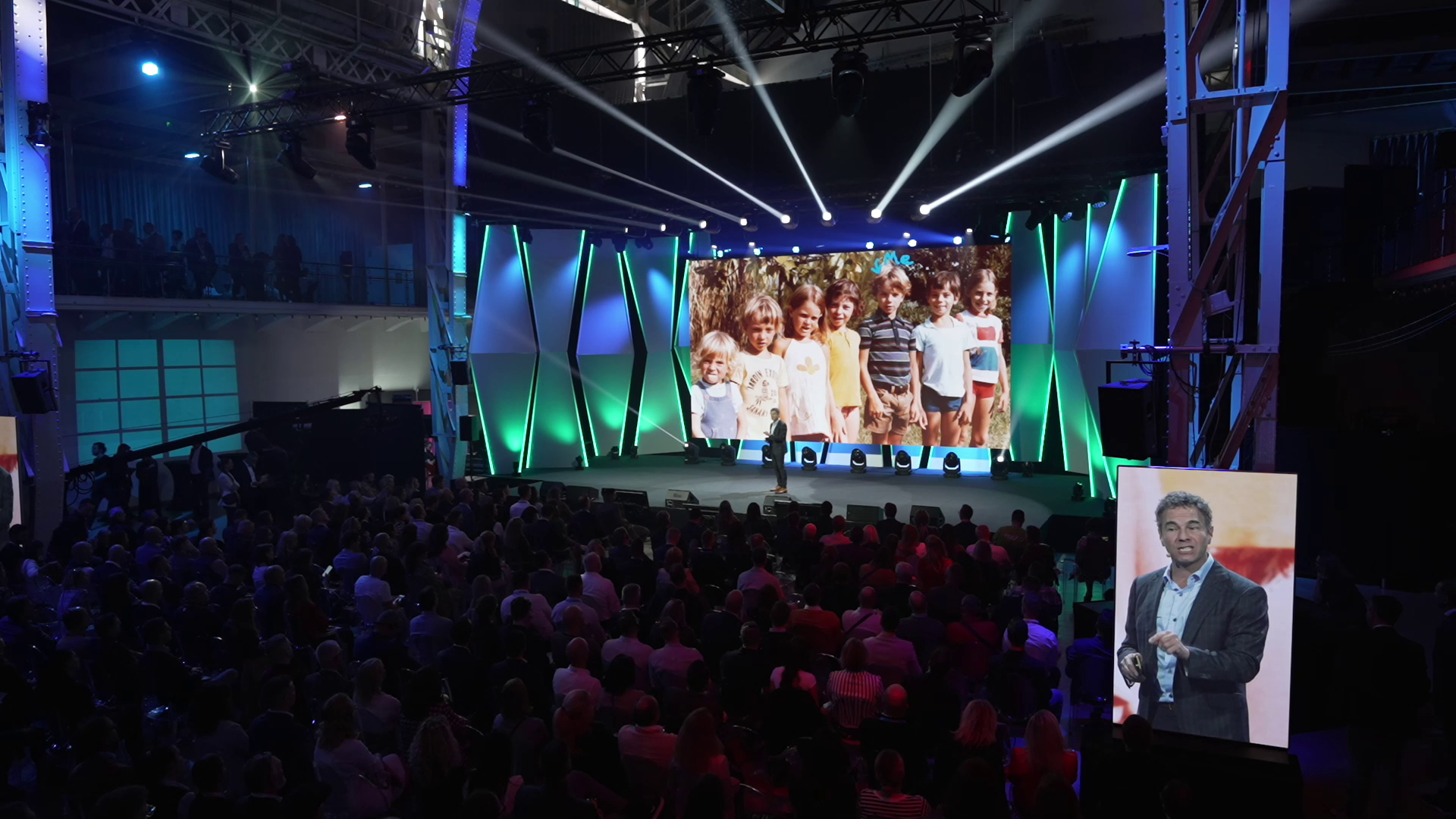
Some speakers need movement, direct contact, and full-body presence. People remember those keynotes years later. I still remember the talk of Shazam co-founder Chris Barton.
But if you remove the lectern completely, your strongest open-stage speakers may shine while other speakers struggle.
Instead of focusing on their talk, they may spend half of their attention managing exposure.
That is bad for them.
And it is bad for the event.
The stage should fit the speaker
This is the actual point.
The question is not:
Should events use lecterns?
The better question is:
What stage setup helps this speaker communicate best?
Some speakers need a lectern.
Some need a table.
Some need notes.
Some need a clicker and open space.
Some need to start behind the lectern and then step away.
Some should not be placed behind a lectern at all, because it will reduce their presence.
The event organizer should not treat speakers as interchangeable bodies.
Speakers are different nervous systems, different levels of experience, different bodies, different relationships with exposure.
So stage design should be adaptive.
A practical suggestion for event organizers
Before the event, talk to each speaker.
Ask simple questions:
- Do you prefer a lectern or open stage?
- Do you need notes?
- Do you like to move?
- Do you feel safer with a physical anchor?
- Would you like to start behind the lectern and then step away?
- Does the lectern support you, or does it trap you?
Then design the stage so it can adapt.
A mobile lectern is ideal.
It should be easy to put aside and easy to bring back.
This gives the organizer flexibility.
It gives the speaker choice.
And it gives the audience a better talk.
Storia Talks
This will be one of the objectives of Storia Talks.
The goal is not aesthetic purity.
The goal is better communication.
If a speaker communicates better with a lectern, we should use the lectern.
If a speaker communicates better in open space, we should give them open space.
The stage should not force every speaker into the same shape.
The stage should help each speaker become more alive.