In Meet Joe Black, there's a running joke about one of life's supposed certainties.
Death and taxes.
And when you think about it, there's something profound behind that familiar saying.
Let me take you to 16th-century England.
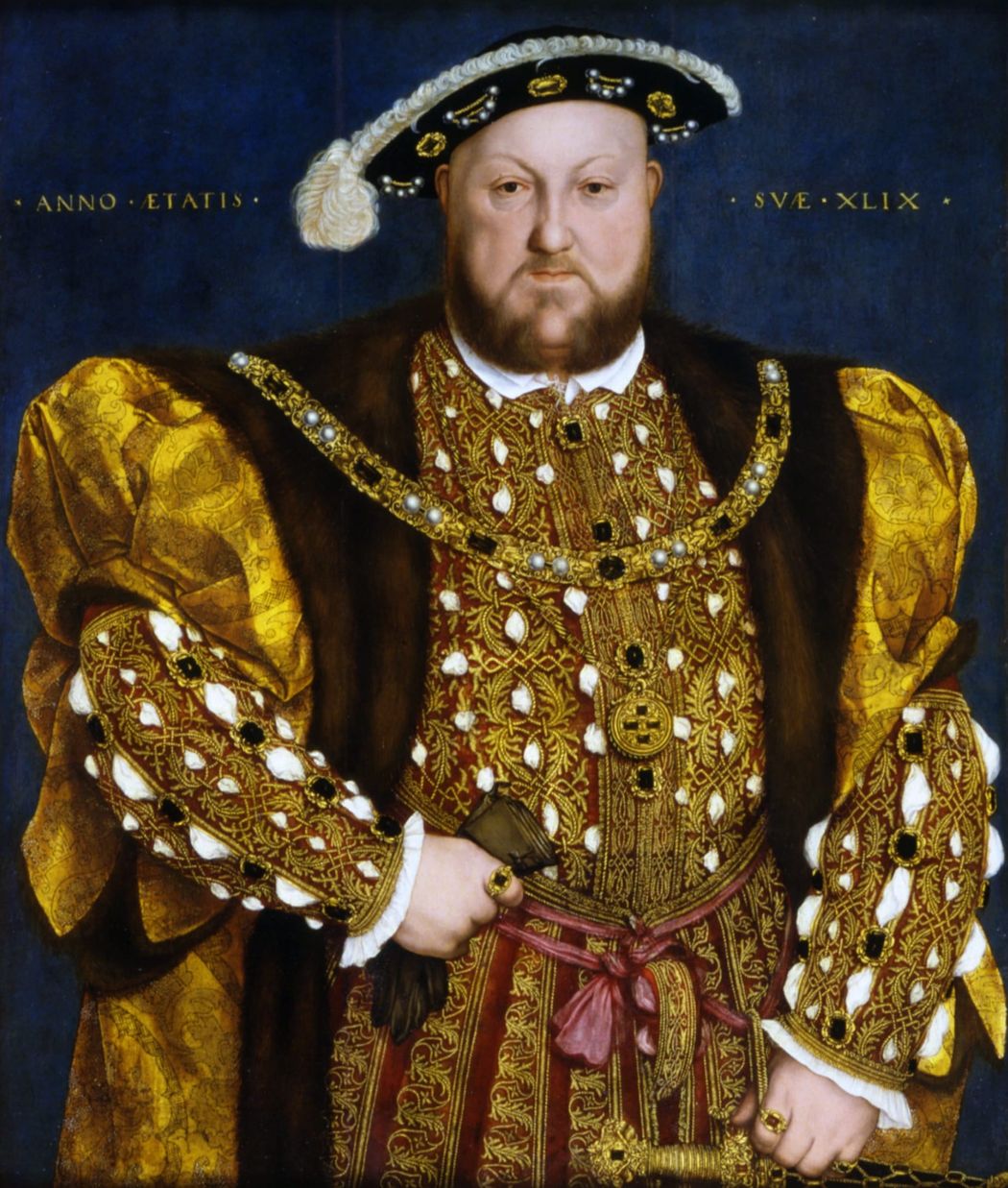
King Henry VIII was a devoted defender of the Catholic Church.
He opposed Martin Luther and his Protestant Reformation so fiercely that he wrote a theological work against him.
In 1521, Pope Leo X rewarded Henry with the title Fidei Defensor.
Defender of the Faith.
And yet, just over a decade later, the same king broke England's ties with Rome.
So how in the hell did England end up with its own Church?
Remember: nothing is certain but death and taxes.
Henry VIII wanted his marriage to Catherine of Aragon annulled.
Their marriage had originally served dynastic interests. Catherine had previously been married to Henry's older brother, Arthur.
But now Henry faced a problem.
He desperately wanted a legitimate male heir.
And he had fallen in love with Anne Boleyn.
He didn't want Anne to become just another mistress.
He wanted her to become his queen.
Initially, Henry tried to resolve the matter through Rome.
He sought the Pope's approval to declare his marriage to Catherine invalid.
But Catherine resisted. Her powerful relatives mattered. And the Pope wasn't prepared to give Henry the decision he wanted.
So Henry took a different route.
He challenged the authority of Rome itself.
In 1534, the Act of Supremacy recognized him as the Supreme Head of the Church of England.
Think about the irony.
The king who had defended papal authority against Luther eventually rejected that very authority when it stood in his way.
But this story isn't really about Henry VIII.
It's about normalcy bias.
Our tendency to assume that tomorrow will resemble yesterday, even when circumstances suggest otherwise.
We grow up surrounded by institutions, laws, agreements, currencies, governments, and traditions.
They seem permanent because they've existed throughout our lives.
But they're not necessarily permanent.
The world runs on relationships, institutions, agreements, and expectations.
Some are backed by powerful enforcement mechanisms.
Others depend heavily on trust.
And all can be challenged.
Think about European security.
For decades, many Europeans treated large-scale interstate warfare on the continent as something belonging to history books.
Russia's war against Ukraine began in 2014 and escalated dramatically with the full-scale invasion in 2022.
A familiar assumption about European stability was shattered.
Or consider money.
The banknotes in your wallet aren't valuable because the paper itself is special.
Their purchasing power depends on an entire system of institutions, economic activity, laws, monetary policy, and public confidence.
We rarely think about that system when we pay for groceries.
We simply assume it will continue working.
And usually, it does.
Until something changes.
The lesson isn't that we should distrust everything.
Nor that every institution is about to collapse.
The lesson is that stability is not the same as permanence.
Something can survive for centuries and still be transformed within a generation.
Even institutions that seem untouchable can change when enough political, economic, or social pressure accumulates.
We could find hundreds of examples throughout history.
But I'll leave that exploration to you.
Look around.
Think about the things you take for granted.
Which assumptions about your career, your country, your finances, or your future have you never seriously questioned?
What would happen if one of them stopped being true?
Civilizations have fallen before.
Institutions have disappeared.
And history has never promised us that our familiar world must remain familiar forever.
Nothing is certain but death and taxes.
And even taxes have changed their rules countless times.