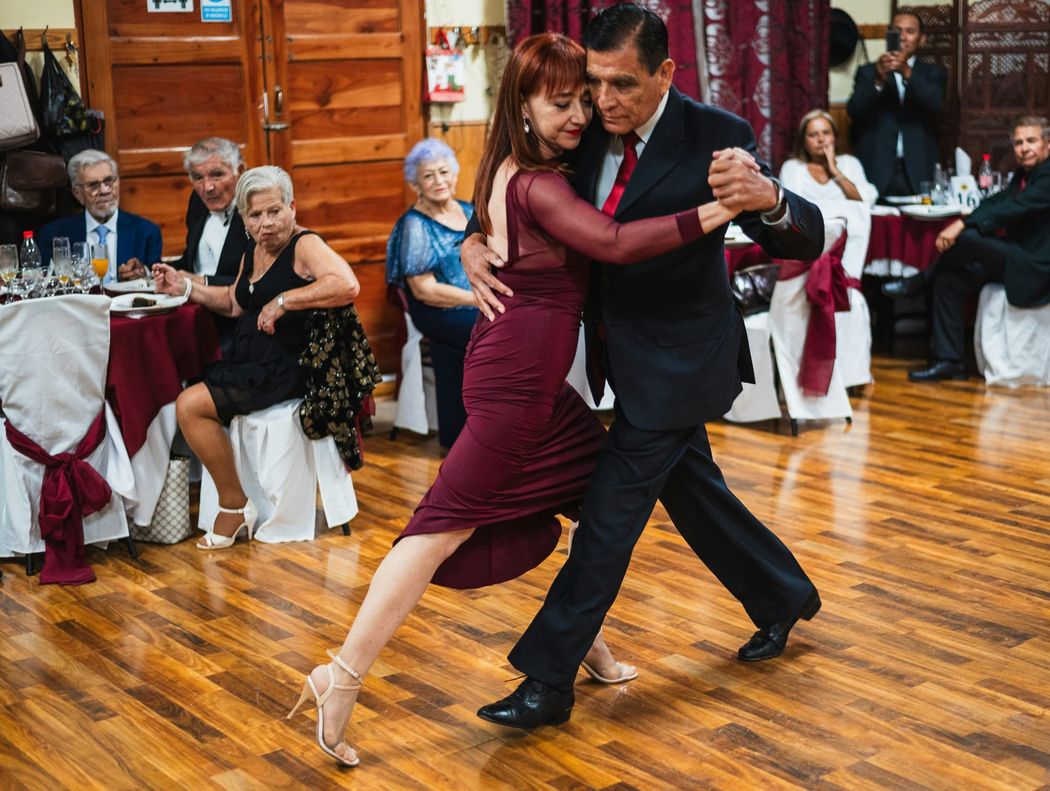
Entrepreneurs cannot be boxed into one category.
Even among us, there is a whole distribution. Women, men, solopreneurs, freelancers, serial entrepreneurs, small business owners, technical founders, artists building companies, and rare outliers operating at a scale almost nobody else understands.
So I do not want to pretend there is one universal entrepreneur type.
There is not.
But based on my personal experience, my entrepreneurial friends, and years of observing founders, I do believe many of us behave differently from the majority of the population.
Some of these differences are useful.
Some are dangerous.
And some become useful only after we integrate the missing layer.
For me, that missing layer is embodiment.
And the tool that has worked best so far is tango.
What I observed about myself and other entrepreneurs
Let me start with the good part.
Entrepreneurs tend to take ownership.
We usually do not want to spend all day blaming others. If something fails, we try to figure out what happened, adjust, and move.
Many of us share insights, talk with others, mentor younger entrepreneurs, or look for mentors ourselves.
In my case, my mentors were often books.
Later, I started learning mostly by observation, experiments, and first principles.
I have seen many successful entrepreneurs who genuinely impacted the world. People who built companies, products, communities, systems, and tools that changed lives.
And yet, sometimes I looked at them and felt that something was missing.
They were successful.
They were capable.
They were respected.
But something in the way they lived still felt incomplete.
Not always.
Not everyone.
But often enough that I started paying attention.
The missing layer: embodiment
Many entrepreneurs spend a lot of time in their heads.
We think.
We analyze.
We imagine.
We model possible futures.
We create visions that may sound unrealistic when first spoken out loud.
That is part of the gift.
But it can also become the trap.
I will speak for myself here.
Since a young age, I observed the world. I watched people. I noticed their patterns. I saw mistakes before I made them myself.
This helped me avoid some painful and costly errors.
You might say:
Great. He avoided mistakes.
Yes.
But that is not the whole story.
My mind learned that observation brings results while minimizing cost.
So I entered a self-reinforcing loop.
Observation led to more pattern recognition.
More pattern recognition helped me avoid more mistakes.
Avoiding mistakes confirmed that observation works.
So I observed even more.
Repeat this long enough, and something happens.
You develop a very strong observer.
And then, in adulthood, you may realize that you feel more like an observer of life than its participant.
That is the problem.
Two different trajectories
Let me give a counterexample.
Imagine someone who is good at physical education from a young age.
He is picked for group sports.
He moves well.
He receives positive attention.
He learns how to use his body naturally in social space.
He experiences competition, teasing, conflict, touch, posture, confidence, attraction, rejection, repair, and improvisation through his body.
Results bring admiration.
Admiration brings confidence.
Confidence improves social outcomes.
Better social outcomes create more confidence.
Another self-reinforcing loop begins.
Two people.
Two different trajectories.
One becomes an observer.
The other becomes a participant.
I achieved success in my own way and still often felt like an observer.
Someone else may not discover a new cancer treatment or build an ambitious company, but he might have lived as a participant since childhood.
For a long time, that life was tempting to me.
Not because I wanted to become someone else.
But because I did not want to change the world in isolation.
I did not want to be unique and detached.
I wanted a life.
Embodiment amplifies entrepreneurship
Here is the important part.
If you break the old pattern and become more embodied, your entrepreneurial skills do not disappear.
They get amplified.
Charisma, magnetism, presence, and pull are not just buzzwords.
I have real experience with this.
There were phases of my life where I was consciously learning how to pull people toward me. Not through manipulation, but through presence, communication, energy, and social calibration.
It took years.
And the more embodied I became, the more my existing strengths started to land.
The mind was not the problem.
The body was not the problem.
The problem was the disconnect.
When the body starts supporting the mind, the whole person becomes more visible.
What many coaches rarely say
I am sure there are exceptions, but many coaching programs are optimized for fast visible results.
Not for integration over years.
If someone struggles with dating, social confidence, or public presence, there are brute-force methods. You can approach enough people. You can optimize scripts. You can win by numbers.
And yes, if you try one hundred times, statistically some things will work.
But that is not always integration.
You can get outcomes while still being disconnected from your body.
You can collect results while your nervous system remains unchanged.
You can perform confidence while still not feeling at home in yourself.
That path was not for me.
I did not want only tactics.
I wanted permanent improvement.
I wanted to break the pattern.
If you lived inside the self-reinforcing loop of the observer and analyst, at some point you need to break that loop and become a participant and actor.
How to break the loop
There are many possible ways.
Sports.
Martial arts.
Theatre.
Singing.
Public speaking.
Manual craft.
Movement practice.
Social dance.
I tried different things over the years with different degrees of success.
But nothing accelerated my trajectory as much as tango.
I chose tango deliberately.
It was never only about the dance.
I was looking at it almost like a scientist looking for the right tool.
The goal was embodiment.
The feeling that my body firmly supports my mind.
The balance of body, mind, and soul.
Tango became one of the strongest tools I have found for this.
This iconic scene made tango look theatrical. Real tango is usually less cinematic, but equally powerful. Its real force lies in presence, connection, and the body learning to participate.
Why tango works
First, in tango you cannot only observe.
You have to participate.
You can watch videos, analyze technique, study musicality, and understand movement principles. All of that helps.
But sooner or later, you need to stand in front of another human being, enter the embrace, listen to the music, move, decide, adjust, recover, and continue.
That breaks the observer loop.
Second, tango gives you a dojo.
It is a compressed social layer where you practice far more than dancing.
You talk to people.
You invite.
You accept.
You decline.
You get declined.
You laugh at yourself.
You make small mistakes in public.
You tease.
You flirt.
You read the room.
You calibrate.
You learn how your body affects others.
This is social training, but without reducing it to networking.
Third, tango normalizes human contact.
In tango, embrace is not weird.
Tangueros hug all the time. Men and women. Friends, teachers, dance partners, newcomers, old community members.
In some cultures, this is normal.
In others, it was forgotten.
For someone who lived too much in the head, this matters.
The body learns that contact does not need to be threatening, transactional, or exceptional.
It can simply be human.
Fourth, tango helps you rediscover your personality.
If you are expressive inside but struggled to let the world see it, tango teaches your body to broadcast what is already there.
This is exactly my case.
I did not invent a new personality.
I did not become someone else.
I started removing blocks.
And suddenly, people could see more of the Vlad I had been seeing all my life.
That is embodiment.
Fifth, tango trains decisiveness.
This is extremely entrepreneurial.
When you dance, hesitation is visible.
You cannot endlessly analyze every possible step. You cannot hold a meeting with yourself before every movement.
You commit.
Sometimes imperfectly.
Then you adapt.
A clear but imperfect movement is often better than a half-movement filled with doubt.
This translates directly into business.
Decide.
Move.
Read feedback.
Correct.
Continue.
Tango might be addictive
You have been warned.
Success in business is satisfying, but many business achievements feel like slow progression.
You work.
You improve.
Something eventually compounds.
Tango is different.
When embodiment starts breaking the old loop, the progress can feel immediate.
A better embrace.
A cleaner walk.
A more relaxed body.
A partner smiling because something finally worked.
A teacher noticing the change.
A group responding to your energy differently.
Suddenly, the body starts receiving evidence that life is not only something to analyze.
It is something to enter.
That can become addictive.
Right now, I am in a rapid acceleration phase.
If I could, I would dance every day.
Not because I want to escape work.
Because the progress is so alive.
I want to experiment, learn, observe, try, fail, adjust, and try again.
The funny part is that this is still entrepreneurial behavior.
Only now the startup is my body.
Your disadvantage might become your advantage
Observers of life often feel lesser.
They may see others living more naturally, moving with more confidence, dating more easily, joining groups faster, taking social risks earlier, and inhabiting their bodies without thinking so much.
But the observer is not broken.
The observer optimized for different outcomes.
Usually unconsciously.
Pattern recognition.
Risk reduction.
Learning from others.
Strategic distance.
Analytical power.
These are real strengths.
The problem appears when observation becomes the whole identity.
But if you introduce embodiment, something interesting happens.
You do not lose the observer.
You add the participant.
And then you have both.
You still retain your pattern recognition.
You may become an extremely fast learner because you can observe, analyze, test, and integrate.
You may also be more willing to improvise.
Many students wait for permission. They want the teacher to tell them exactly what to do.
Entrepreneurs often behave differently.
We act.
We test.
We break things into principles.
We ask:
What is really happening here?
I love approaching tango through physics, movement, musicality, and first principles.
Not to turn it into a cold technical exercise.
The opposite.
Once I understand the principles, I can improvise.
I do not want to dance only learned routines.
I want to understand the underlying structure well enough to become free inside it.
That is also how I build companies.
Embodiment reveals the truer self
This may be the most important insight.
Embodiment amplifies your inner self.
It does not replace you.
It does not give you a fake personality.
It does not turn you into someone else.
It removes blocks so that what was already inside can finally reach the outside world.
When you do this work, you will not become me.
You will discover more of yourself.
That matters in business.
Conversations become easier.
Networking becomes less forced.
Sales becomes less artificial.
Sometimes I sell almost accidentally. I talk about what helped me, why it helped me, and what I learned. Then people ask for more.
That is not a sales script.
That is congruence.
The body, mind, and story are aligned enough that people feel the signal.
Work-life balance after embodiment
There is another effect.
After you discover embodiment, it becomes harder to spend the whole day only thinking.
I do not mean deep work.
I love deep work.
I mean the old mode where life is mostly mental processing, screens, abstractions, plans, models, and postponed living.
Once your body learns that life can be felt directly, it starts demanding its place in the operating system.
That changes how you design your business.
For me, tango is not a hobby squeezed into leftover time.
It is becoming part of the architecture.
I am adjusting my work, travel, training, and business strategy around it.
Not because tango is more important than business.
Because the business must support the life I am building.
If my company requires me to abandon embodiment, culture, movement, relationships, and joy, then the company is not aligned with its own purpose.
Conclusion
Tango is not the only path to embodiment.
It is simply the strongest path I have found so far.
For some people, it may be martial arts.
For others, theatre, singing, sports, manual work, or public speaking.
But if you are an entrepreneur who lives too much in your head, the specific method matters less than the direction.
You need to become a participant.
Not only an observer.
You need a body that supports your mind.
Not a mind dragging the body behind it.
If you struggle even with basic social contact, start slower. There is no shame in that.
But do start.
I wish the world was less about hustle, grind, and detachment, and more about the balance between mind and body.
I want more people to experience what it feels like to actually live their lives.
Embodiment might be the first step.
And if I know anything about entrepreneurs, it is this:
When we truly commit, we tend to stick.