I am a founder, but I am not pretending to follow the conventional route.
In fact, I am building something so experimental that I cannot yet know whether my operating model will work.
We will find out together as I keep building.
Why I refused the conventional route
Startups have their ecosystems.
They have their ways of building products, validating ideas, raising money, hiring teams, and scaling.
Most of that is close to me.
Except for two things.
First, in most cases, if I build with someone else’s money, I also accept someone else’s control.
That means having a boss again.
I left the corporate world for a reason.
Second, I refuse to sacrifice five to ten years of my life for a grind that statistically may still end in failure.
Do not get me wrong.
I admire every founder who tries to build anything. In fact, I encourage people to try building something on their own. Maybe they will value their employment more afterwards.
But I do not want to build a company by deleting my life.
Can we build big and still have a life?
This is the fundamental question I have been asking for the past year while designing my alternative work operating system.
In media and startup culture, we are usually given two models.
The first model says:
If you want to build something big, you must work like a horse.
And even if you later have hundreds of employees, the grind will continue.
The second model says:
If you want to have a life, you will never build anything beyond a nano-company with a few employees.
I do not like either option.
So I am looking for a third path.
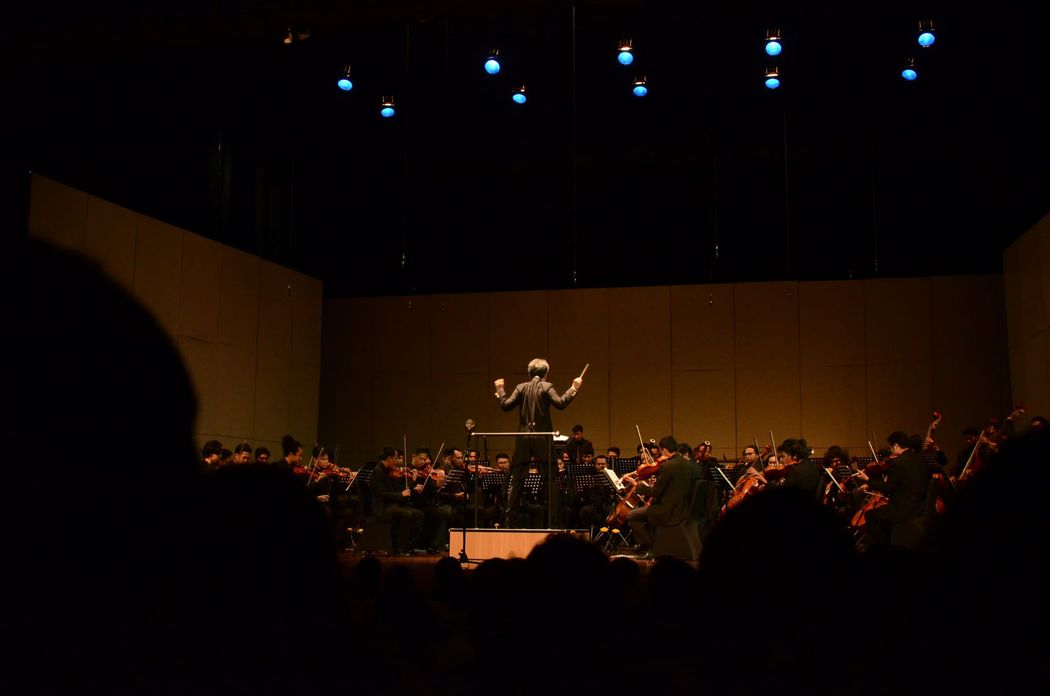
The conductor of an orchestra
People familiar with classical music know how orchestras operate.
In a nutshell, you have specialists split into sections.
They are human beings, of course. But they are so good at playing music that, from the outside, they almost feel like living instruments.
You give them the music sheet and they play.
I am willing to bet a professional orchestra could play the whole overture without a conductor. It would not be ideal, but it would probably still be okay.
Then comes the conductor.
His role is not to play each instrument.
He does not micromanage the violin, trumpet, cello, flute, and timpani.
The conductor calibrates the orchestra.
He gives direction.
He signals timing, tempo, emphasis, restraint, transitions, pauses, and emotional pressure.
The musicians still read the music sheet. They still know their craft. They still play their instruments.
But they also read the conductor’s signals.
Often with peripheral vision.
Impressive, right?
The conductor gives the music interpretation.
Without him, the orchestra may still play correctly.
With him, the music breathes.
How can this model transfer to a company founder?
When you start building a business, you usually do everything.
Or maybe you have a few friends, the co-founders.
This model is natural in the beginning, but unsustainable over time.
Either you get funding and quickly scale up, which often becomes the grind model.
Or you work on your startup for years, never really enter the market, and slowly burn out in another way.
The second case is too familiar to me, but that is a different story.
Now imagine a company that has stabilized its income, hired twenty or more employees, and where you are still operating as founder and CEO.
I have observed many successful companies and founders. In many cases, the CEOs still grind.
Even with dozens or hundreds of employees, they work ten to fourteen hours a day, and somehow this is considered normal.
Maybe these people enjoy working that much.
Maybe work is their identity.
Maybe pressure, speed, control, and being needed are part of the reward.
Or maybe nobody told them that scale does not have to mean burning your life away.
When I look at the existing models, something feels wrong.
If a founder has hundreds of employees, why is the founder still consumed?
Why does the machine not run?
Why does everything still depend on one nervous system?
I see a few possible explanations.
First, the CEO may still control too many decisions.
The employees might be skilled, but all major decisions still return to the founder. The founder becomes the bottleneck. With enough people, the coordination overhead alone can create endless work.
Second, some founders may enjoy the fire.
The company becomes their arena. Their identity. Their proof of importance. Their battlefield.
That is one path.
It does not need to be mine.
Third, the company may never have invested enough into foundational documents and operating architecture.
Hiring standards.
Decision guidelines.
Delegation principles.
Operational scopes.
Quality bars.
Escalation rules.
Review rituals.
Cultural doctrine.
These things may exist.
But only in the mind of the CEO.
And if the rules exist only in the founder’s head, the founder cannot leave the room.
I would like to clone myself
There is a movie called Multiplicity, where Michael Keaton clones himself a few times and delegates his life to his clones.
Over time, each clone develops a unique personality, because from the moment of cloning, each becomes an independent human being.
This turns into a disaster.
Also, the option is impractical.
So I had to come up with something else.
The solution is not to clone myself.
The solution is to gradually formalize the strategic and foundational documents and keep expanding them.
But documents alone are not enough.
You also need people who understand the vision deeply enough to execute without constant explanation.
That is why I designed a custom hiring pipeline.
I need to find people who are not only skilled, but aligned.
Processes and people are still not enough.
As the company grows and new people join, the system can drift.
That is why I am considering adding LLMs into the equation.
LLMs are useful at pattern recognition.
But first, you must define the patterns they should watch.
Once the doctrine, principles, standards, and operating boundaries are clear, LLMs can potentially act as validators.
Or better said, as a kind of firewall.
They can help detect whether operating decisions still fit the frame.
Not as final judges.
Not as CEOs.
But as pattern-checking infrastructure.
Remember when I said that what I am building is experimental?
Here you go.
I do not have much choice
I made a decision.
I will not sacrifice my life to build a successful company.
But I still want to build such a company.
With all my daily activities, sometimes I have only three to five hours a day to work on my business.
With the prevalent models, I would fail for sure.
So I need another model.
I do not see myself primarily as a conventional CEO.
I see myself as a conductor with a mission and vision.
The orchestra should play.
I should not play every instrument.
My role is to shape timing, emphasis, coherence, standards, restraint, amplification, and interpretation.
I will still direct the orchestra.
But I plan to delegate most operations to future employees and collaborators.
Not blindly.
Under supervision.
With doctrine.
With standards.
With review loops.
With trusted lieutenants.
With systems that carry my intent even when I am not present in every decision.
Not a theory anymore
No, I have no idea how this will work at scale.
But yes, the model is already operational in a small form.
I have hired a few part-time contributors.
As I work with them, I am refining the model.
As an IT guy, I even tagged it as the alpha version.
Before we reach beta or first release candidate, it may take a couple of years.
Maybe a decade.
That is fine.
Besides building this in public, I am sharing fragments of my blueprints for free.
Maybe some of the thoughts will resonate with you.
Right now, my bottleneck is not only funding, although funding would certainly help.
My bigger bottleneck is that almost nobody knows me yet, or what I am building.
Until that changes, I will keep writing, documenting, testing, refining, and of course, building.
The final principle is simple:
If the empire requires my permanent exhaustion, the architecture failed.