My bed broke while I was sitting on it.
Not during some dramatic accident.
Not while moving furniture.
I simply sat down, heard a crack, and suddenly had a problem to solve.
Fortunately, it wasn't a serious one.
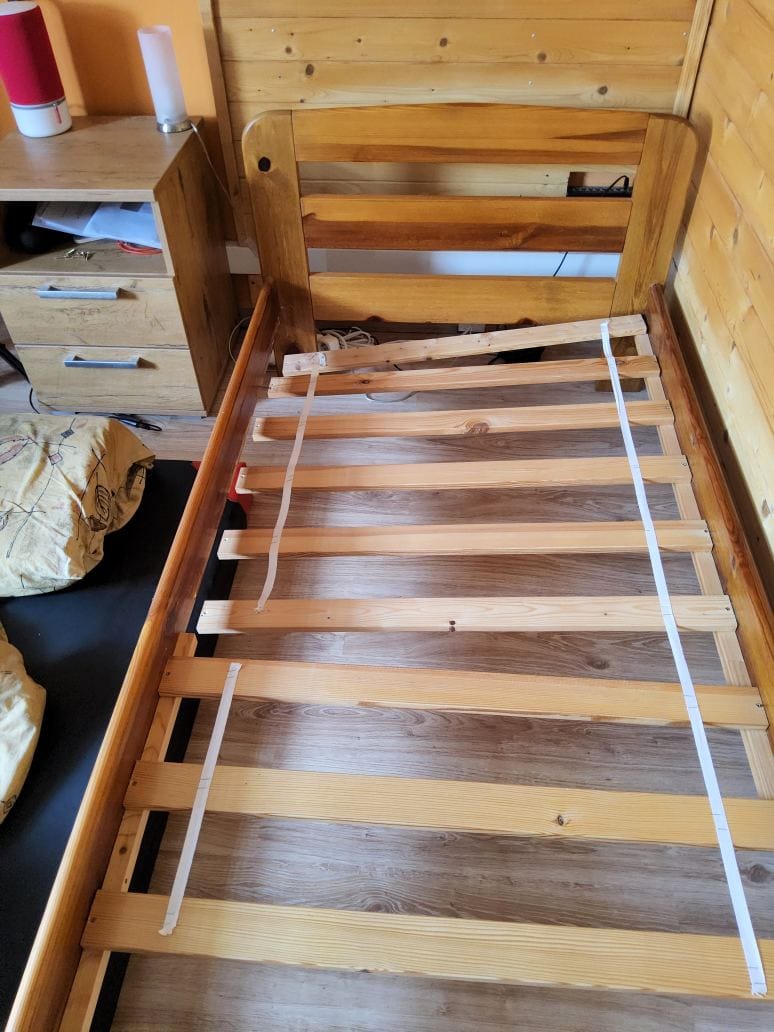
The repair is straightforward. A wooden support snapped, and replacing it would take little effort.
But before I could repair the bed, I still needed somewhere to sleep.
So I improvised.
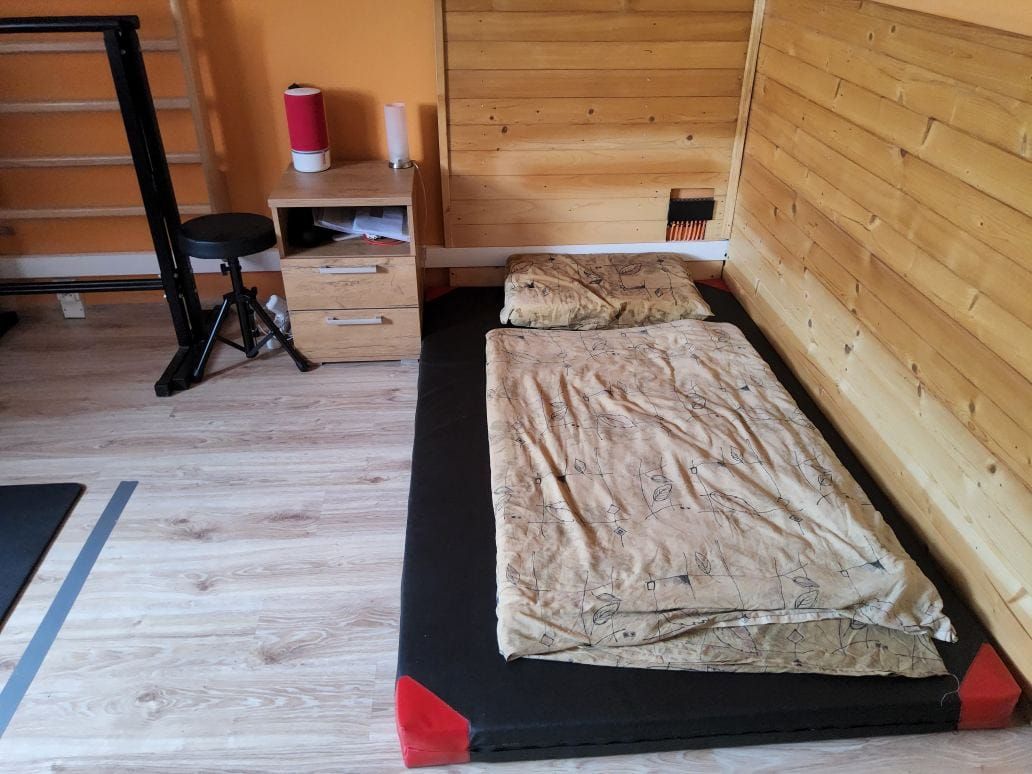
I pulled out my workout mat.
The mat is roughly ten centimeters thick, slightly wider than my bed, and already occupies a permanent place in my studio. Originally, I intended it for calisthenics, stretching, mobility work, and occasional experimentation with movement.
That evening it became my bed.
I expected a temporary inconvenience.
Instead, I woke up surprisingly comfortable.
Not better.
Not worse.
Simply comfortable.
And that is when the real question appeared.
Should I repair the bed at all?
What used to be my bedroom has gradually transformed into something else.
Over the past months it became a multipurpose studio.
A place where I:
- practice calisthenics
- train mobility
- rehearse tango
- experiment with movement
- play music
- work
At one point I even turned my dip bars into a fixed-height standing desk.
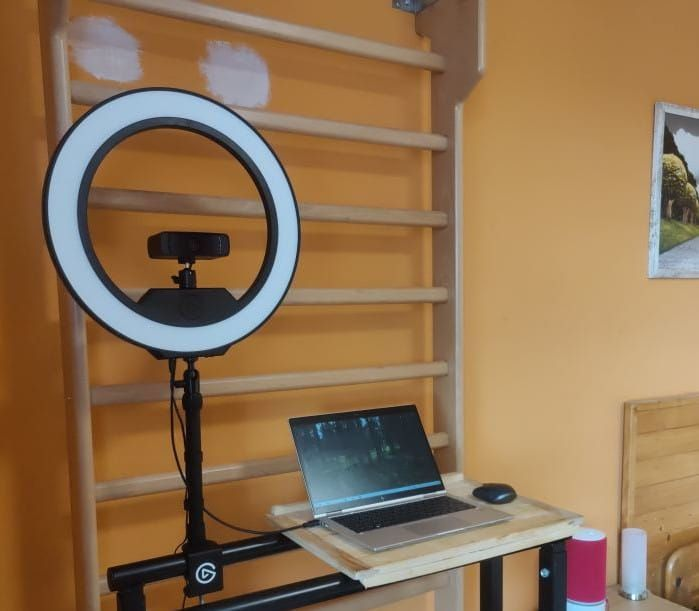
The room stopped being a traditional bedroom long ago.
The bed was simply the last remaining artifact of its previous life.
And it occupied a surprising amount of space.
Every time I wanted to practice tango walking, use the mat, or rearrange the room for another activity, the bed was there.
Not enough to become a major problem.
Just enough to create friction.
The kind of friction that becomes invisible because it is always present.
I got used to it.
Most people do.
After moving to the mat, the room suddenly felt larger.
More flexible.
Easier to use.
The workout mat serves multiple purposes already.
Now it serves one more.
It is also remarkably easy to maintain.
No bed frame.
No mattress.
No complicated cleaning.
When needed, I simply wipe it down and it is ready.
Ironically, I was already cleaning it regularly because of workouts.
The "new bed" was already part of my maintenance routine.
Will this become a permanent solution?
Probably not.
Very few things in my life are permanent.
But it might remain this way for months.
Perhaps years.
I genuinely do not know yet.
The beauty of the experiment is that it is completely reversible.
I did not throw the bed away.
I merely disassembled it.
If I change my mind, I can rebuild it.
Nothing is lost.
What fascinates me most is not the sleeping arrangement itself.
It is what the situation revealed.
I never questioned whether I needed a bed.
Not because I carefully evaluated the alternatives and concluded the bed was optimal.
I never questioned it because beds were always there.
My parents had beds.
My grandparents had beds.
Every apartment I ever visited had beds.
A bed was simply part of reality.
Or so I assumed.
The broken frame forced me to examine an assumption I had never consciously chosen.
Most life upgrades do not begin with optimization.
They begin with interruption.
Something breaks.
Something changes.
Something becomes impossible.
And suddenly we are forced to ask questions we never considered before.
The default response is usually simple:
Fix what broke.
Restore the previous state.
Return to normal.
But occasionally there is another option.
Use the interruption as an invitation to rethink the system itself.
The more I think about it, the less this story is about a bed.
It is about default settings.
Beds.
Desks.
Living rooms.
Work schedules.
Learning methods.
Career paths.
Relationships.
Many aspects of life exist not because we consciously chose them but because we inherited them.
Sometimes they are excellent choices.
Sometimes they are not.
The point is not to reject every convention.
The point is to realize that conventions are choices.
And choices can be re-examined.
If your bed broke today, what would you do?
Would you repair it immediately?
Would you replace it?
Or would you pause for a moment and ask a different question:
"Why was I using it this way in the first place?"
You may arrive at the same conclusion you always had.
Or you may discover an alternative that was hiding in plain sight.
I needed a broken bed to see mine.
Perhaps you don't need to wait for something to break.
Perhaps a random article on the internet is enough.