Space technology has fascinated me since childhood.
Not to the point where I wanted to become an astronaut or work in the industry. But I always admired the engineering behind it. Early space missions were dangerous experiments. Today we casually rely on satellites for navigation, communication, weather forecasting, and even internet access.
Somewhere along the way, space became infrastructure.
Recently, while watching From the Earth to the Moon, I realized something surprising.
For years, I had been looking at NASA through the wrong lens.
NASA as Bureaucracy
The first layer most people see is bureaucracy.
NASA is funded by the American government. Its budget depends on political decisions. Its priorities are influenced by public interest, national strategy, and elected officials.
NASA and politics are not separate worlds.
When John F. Kennedy announced that America would land a man on the Moon before the end of the decade, he created an extraordinary challenge for thousands of engineers who somehow had to make that vision real.
From the outside, this can look inefficient.
Large organizations move slowly. They require approvals, reviews, procedures, documentation, and oversight. Compared to a startup, NASA can appear almost painfully cautious.
But unlike most bureaucracies people encounter in daily life, NASA has a reason for much of that caution.
People can die.
When your product is a spacecraft carrying human beings hundreds of thousands of kilometers from Earth, safety is not optional.
The more I learned about NASA's history, the more I realized that some forms of bureaucracy are not signs of dysfunction. Sometimes they are mechanisms for survival.
NASA as Architect and Integrator
The biggest misconception I had was believing NASA built everything itself.
When I was younger, I saw rockets launching under the NASA logo and naturally assumed NASA was designing and manufacturing every major component.
Then, over time, I started seeing companies like SpaceX, Boeing, and Blue Origin transporting cargo and astronauts.
It felt as if NASA had fundamentally changed.
What I eventually realized is that contractors were never a new idea.
They were there from the beginning.
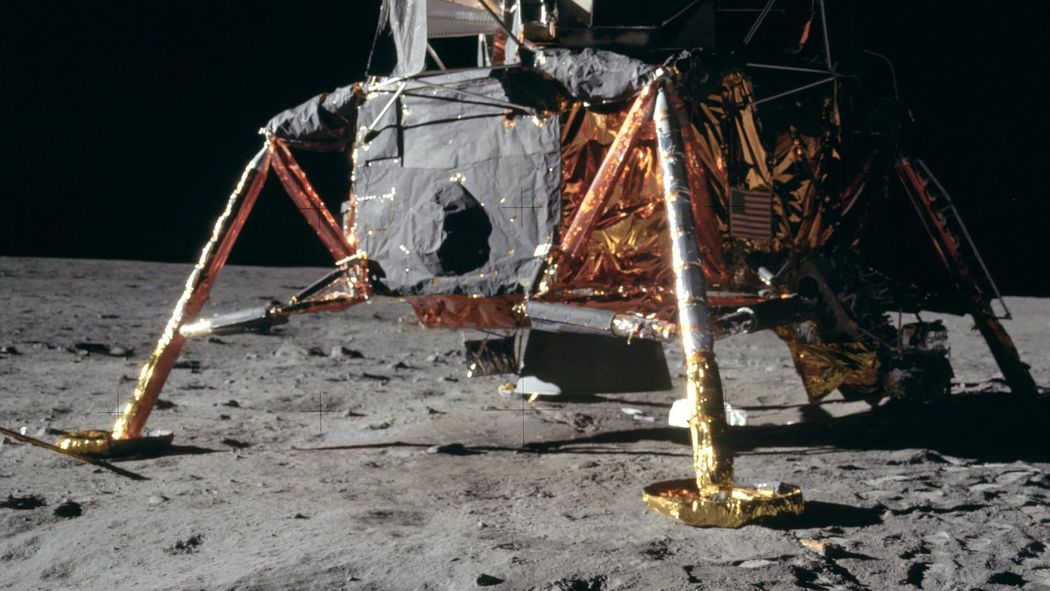
One of the most fascinating episodes of From the Earth to the Moon focuses on the Lunar Module. The engineering challenges were extraordinary.
But the people building it were not NASA employees.
They were engineers working for a contractor.
NASA provided requirements, oversight, testing, reviews, and expertise. The contractor designed and built the hardware.
The Apollo program was simply too large for a single organization to handle alone.
Delegation wasn't optional.
It was necessary.
And it worked.
Looking back, the transition from:
"Build this spacecraft according to our specifications."
to
"Build a transportation system that can deliver astronauts to orbit."
was gradual.
Over decades, private companies accumulated knowledge, experience, and trust.
An analogy comes to mind.
When NASA began, it had many of the world's best aerospace engineers. Private contractors were still learning.
Over time, those contractors matured.
The juniors became seniors.
The seniors became architects.
The architects built companies capable of taking on increasingly complex responsibilities.
NASA didn't suddenly abandon engineering.
The ecosystem around NASA simply became more capable.
NASA Is Not a Startup
The more I thought about it, the more I realized NASA is optimized for something fundamentally different than a startup.
Startups optimize for speed.
They experiment.
They pivot.
They fail fast.
They can afford to take risks because they have relatively little to lose.
Institutions operate under different constraints.
Institutions are designed to survive.
They need systems.
They need processes.
They need continuity.
They need thousands of people working toward a common objective, often across decades.
And perhaps most importantly, they need to preserve and transfer knowledge.
This is another aspect of NASA I previously underestimated.
With a few exceptions, much of NASA's work enters the public domain.
Mission reports.
Technical documentation.
Photographs.
Research.
Educational materials.
The organization gives away an astonishing amount of knowledge for free.
A startup would consider this madness.
A startup's primary objective is often growth and monetization.
Institutions optimize for different outcomes.
Research.
Education.
Scientific progress.
Cultural preservation.
Long-term capability building.
Neither model is inherently better.
They simply solve different problems.
What I Missed
For years, I saw NASA primarily as a slow bureaucracy that occasionally produced something impressive.
I assumed the success was almost inevitable.
If you spend enough money and hire enough smart people, surely something useful will emerge.
Now I see something different.
I see an organization that has spent decades systematically reducing risk.
Early space missions were incredibly dangerous.
Today, we occasionally read stories about astronauts dealing with software issues or routine operational problems.
Oddly enough, that is evidence of success.
The dramatic risks have become less common.
The systems have become more reliable.
The procedures have become more mature.
The bureaucracy I once criticized is partly responsible for that.
There are certainly situations where excessive bureaucracy becomes harmful.
But there are also situations where structure, review, and process create safety that would otherwise be impossible.
NASA helped me appreciate that distinction.
Why NASA Became a Surprising Mirror
The most surprising realization wasn't about rockets.
It was about institutions.
I no longer see NASA primarily as a space agency.
I see it as a system designed to coordinate thousands of people toward a mission larger than any single company could achieve alone.
Whether one agrees with every NASA decision is almost beside the point.
The organizational pattern itself is fascinating.
It made me realize something about my own work.
For years I described what I build as a company.
Recently I started questioning that definition.
Companies optimize for business.
Institutions optimize for continuity.
Companies optimize for growth.
Institutions optimize for stewardship.
Companies are often built around products.
Institutions are built around missions.
I don't know whether the organizational model I am experimenting with will work.
Nobody knew whether landing on the Moon would work either.
People had to test ideas, build systems, fail, learn, and adapt.
My ambitions are considerably more modest.
I'm not trying to reach the Moon.
I'm trying to explore whether there are alternative ways to organize human creativity, learning, and knowledge sharing.
If even a few of those ideas prove useful and others adopt them, I would consider that a success.
Watching NASA through this lens changed something for me.
I used to see a bureaucracy.
Now I see an institution.
And perhaps, for the first time, I understand the difference.